Most digital twin projects do not go over budget because someone mispriced 3D modeling. They go over budget because the RFP unintentionally describes a platform without saying so.
A digital twin is, by nature, a living system: a virtual representation of a real-world asset that can exchange data and support decision-making.
So if the RFP is vague, stakeholders keep adding “just one more thing” (more data, more realism, more integrations, more channels), and the vendor keeps discovering hidden work.
This article gives you a plain-English RFP structure built for sales-led real estate projects. The goal is simple: the digital twin stays part of a holistic strategy, integrates with CRM and ERP only where it adds value, and avoids cost surprises by forecasting hosting and maintenance early.
Digital Twin RFP Template
In the article, you’ll find copy-paste ready RFP sections. Based on them, we prepared a Digital Twin RFP Template (PDF) that you can download here:
The core idea: lock the purpose before you list features
To keep the RFP approachable (and still disciplined), use a simple trio:
-
Purpose: what decisions or actions the twin enables
-
Trust: what data is authoritative, what is illustrative, and what must be verified
-
Function: how it performs in the channels you will deploy (web, showroom, events)
This maps well to the Gemini Principles language without turning your RFP into a standards document.
1) Put the Digital Twin inside a holistic sales strategy (not a standalone add-on)
What to write in the RFP (copy-ready)
Role of the Digital Twin
The Digital Twin is a component of our holistic sales and marketing strategy. Its purpose is to accelerate decisions and improve conversion across channels (web, sales center/showroom, events). It must support a coherent customer journey and reuse the same core content pipeline across touchpoints.
Why this prevents scope creep
Every future request becomes one question: does this change measurably improve the sales journey? If not, it is out of scope or a priced option.
Add outcomes, not a feature wishlist
Pick 4 to 6 outcomes and require vendors to map their scope to them:
-
Increase qualified leads (capture and enrichment)
-
Faster unit shortlisting and comparison
-
Better meeting efficiency (less back-and-forth)
-
Higher engagement time in showroom and event activations
-
Better follow-up (what a buyer viewed and shortlisted)
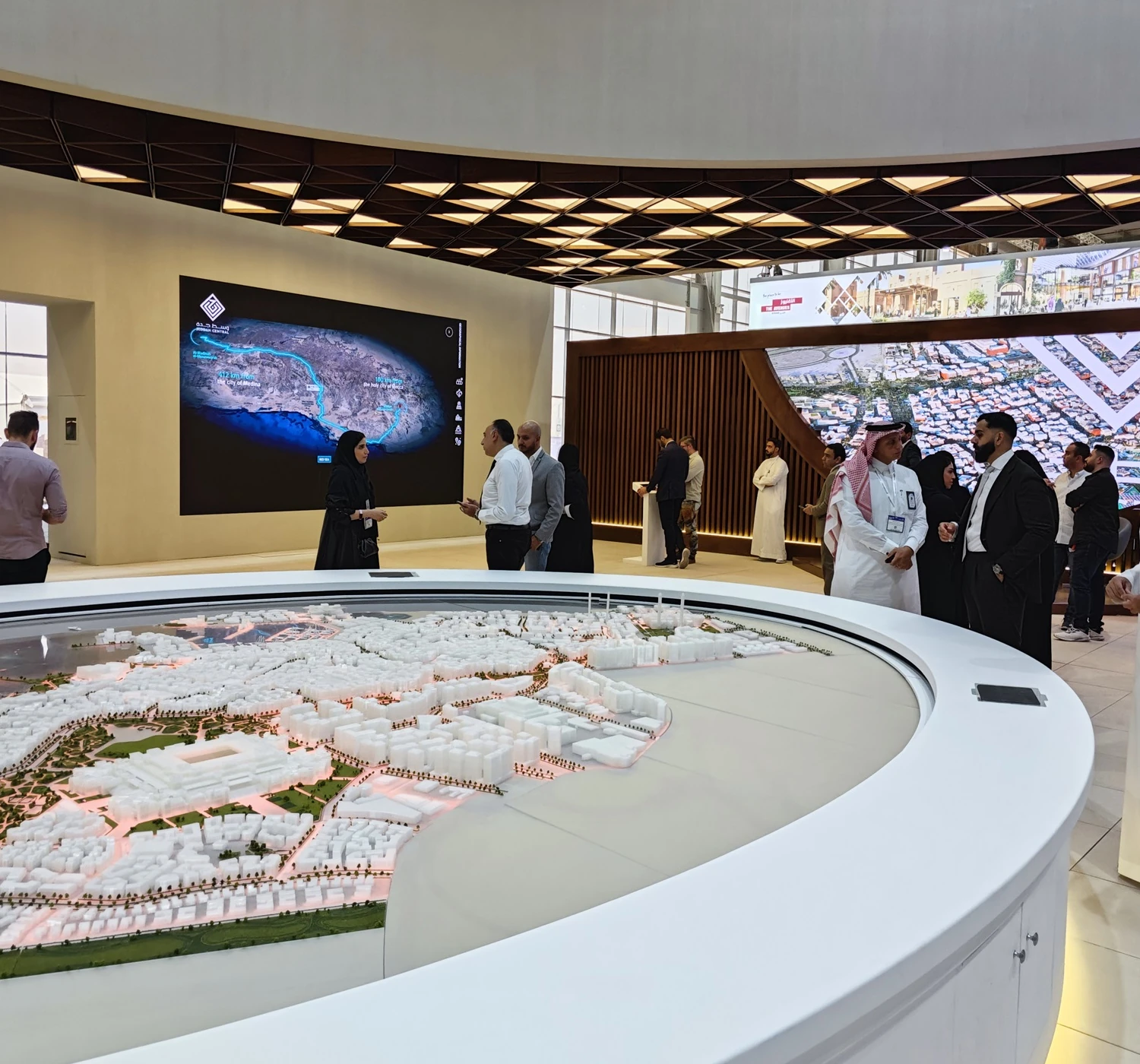
If your stakeholders are mixing up “a 3D model” with “a sales-ready digital twin,” it helps to clarify the difference early. For example: Digital Twin Buildings vs Traditional 3D Models.
2) Decide the delivery approach early: web, showroom/events, or hybrid
This is one of the biggest scope-creep triggers because these three approaches are not comparable in terms of cost, achievable quality, and hosting model. If the RFP does not clearly state which approach is required, vendors will propose fundamentally different solutions, and you will compare proposals that are not truly comparable.
What to do in the RFP
Be explicit. Choose one primary approach and describe it clearly:
-
Is this primarily a web experience for lead generation at scale?
-
Is this primarily a showroom or event experience where premium visuals and guided storytelling matter most?
-
Is this hybrid, meaning one core twin reused across multiple touchpoints, with some channel-specific adaptations?
Include a simple decision matrix
| Approach | Best for | Typical quality | Hosting reality | Scope guardrail |
|---|---|---|---|---|
| Web (browser) | Lead generation at scale | medium to high (depends on stack) | usually predictable web hosting | cap fidelity, define supported devices |
| Showroom/events | Conversion moments | very high | often depends on on-site hardware or streaming | specify AV stack, operator flows |
| Hybrid | Full funnel | mixed by channel | web hosting plus showroom/event needs | define what is shared vs channel-specific |
RFP clause (copy-ready)
Vendor must propose a solution aligned with the specified delivery approach (web, showroom/events, or hybrid). The proposal must clearly list what is included per channel and what is excluded. Any additional channel is treated as a priced option.
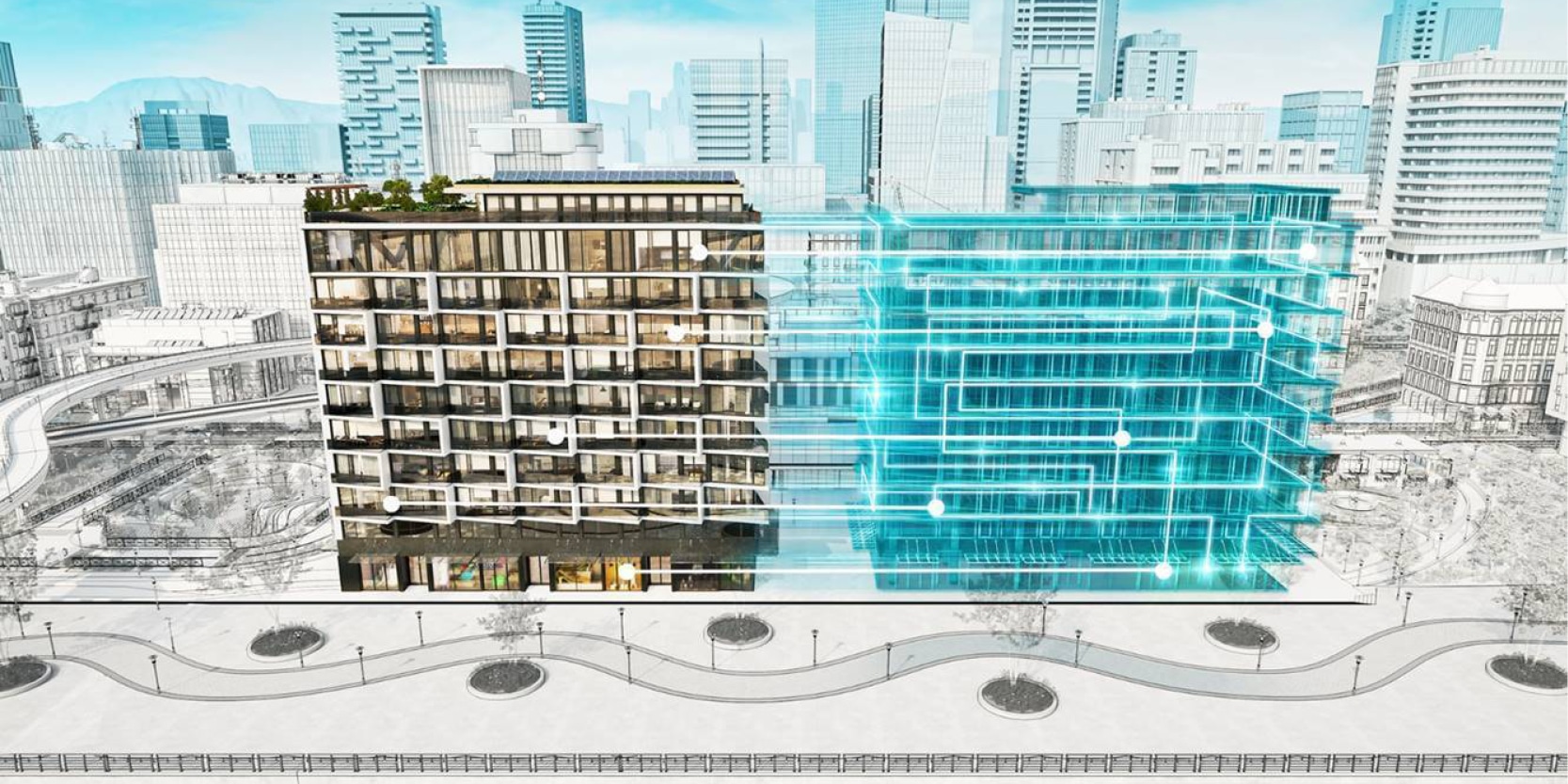
If you want background reading for decision-makers, you can reference Cloud Streaming Digital Twin for remote access and premium visuals, and Pixel Streaming for Exhibitions for the event and showroom use case.
3) Specify what source materials you have today (and what happens if something is missing)
If you do not define inputs, you will get mid-project surprises like “we only have PDFs” or “the latest plans changed.” That becomes rework, and rework becomes scope creep.
Add Appendix A: Inputs Inventory (complete it based on what you can provide)
Anything you cannot provide should be treated as a dependency, a risk, or a priced option.
A1. Site and context
-
Site boundary (DWG/PDF)
-
Masterplan or zoning plan
-
Geolocation reference (if any)
-
Surroundings data (optional): GIS, city model, map export
-
Drone footage (optional) and usage rights confirmation
A2. Architecture
-
Plans/elevations/sections (PDF/DWG)
-
Unit mix and unit plan PDFs
-
Area schedule (Excel)
-
Finish schedule and material palette
-
Brand guidelines (fonts/colors/tone)
A3. Sales
-
Pricing rules (ranges acceptable)
-
Payment plans (only if displayed)
-
Inventory rules (public vs sales-only)
A4. Marketing content
-
Amenity descriptions and lifestyle copy
-
Image library and renders
-
Key selling points by persona
Add an “Inputs Gap” rule (copy-ready)
Within X business days after kickoff, vendor must produce an Inputs Gap Report listing missing or contradictory items and a mitigation plan. Changes caused by late input delivery or revised source files will be handled via change control.

4) Integrations: CRM and ERP only where they add sales value (never a full ERP solution)
Your RFP must prevent the digital twin from becoming “the new system of record.”
Put a hard boundary in the RFP (copy-ready)
Integration Boundary
The Digital Twin integrates with CRM and ERP only where it provides clear sales value (lead capture, availability visibility, pricing display rules, interest tracking). The Digital Twin is not required to implement ERP functions such as payments, invoicing, HR, salaries, procurement, accounting, or billing workflows.
Add Appendix C: Integration Matrix
| System | Purpose | Direction | Data included | Frequency | Notes |
|---|---|---|---|---|---|
| CRM | Lead capture and interest tracking | Digital Twin to CRM | form fields, source, units viewed, shortlist | real-time or daily | Required |
| ERP | Sales-relevant visibility | ERP to Digital Twin | availability flag, price band, unit status | daily | Optional |
| CMS | Content updates | CMS to Digital Twin | text/images for amenities, POIs | manual | Required if used |
Require vendors to price integrations as options so you can compare bids fairly.
5) Define the investment environment (so nobody quotes the entire city by accident)
Environment scope is a hidden multiplier. Stakeholders often ask for “Google Earth style,” “a district around it,” or “drone realism.” Those can be valid, but they must be formalized as environment choices with a baseline.
Add Appendix D: Environment Modes (pick one baseline)
Mode 1: Map context (geo-based)
Best for explaining location and connectivity. Usually simplified surroundings. Great for web delivery.
Mode 2: Whitebox district (sales-first)
Clean massing, fast performance, consistent visuals. Keeps attention on the project. Strong for showroom storytelling.
Mode 3: Cinematic layer (drone or photogrammetry inserts)
Strong marketing moments, higher complexity, requires usage rights and an update policy.
Add “radius rules” (copy-ready)
Vendor must define a Hero Radius (high detail) and a Background Radius (simplified) for surroundings. Anything outside the defined radius is out of scope unless priced as an option.
If you want a lightweight external reference for streaming large geospatial 3D efficiently, you can point readers to OGC’s 3D Tiles community standard as optional further reading.
6) Replace feature lists with Use Cases and “Definition of Done”
This is your strongest scope-creep firewall.
If the RFP defines success as “a beautiful digital twin,” feedback never ends. If it defines success as use cases with acceptance checks, feedback becomes structured and time-boxed.
Add Appendix B: Use-Case Catalogue (example set)
| Use case | Primary user | Done means (acceptance criteria) |
|---|---|---|
| Explore masterplan | Buyer / sales | loads within X seconds; POIs; navigation; language toggle |
| View amenities | Buyer | approved copy/images appear; amenity highlights correctly |
| Unit search & filters | Buyer / sales | filter by type/size/price band; results follow inventory rules |
| Unit comparison | Buyer | compare up to N units; differences visible in one view |
| Shortlist | Buyer | shortlist persists; export/share works |
| Lead capture | Buyer | submission works; CRM receives lead and unit interest |
| Guided tour mode | Sales | scripted path; quick reset; kiosk-safe UI |
Keep “nice-to-haves” as a separate priced options menu (VR, interiors, live data overlays, advanced analytics).
For an example of how formal RFPs structure scope and vendor responses, the City of St. Louis Digital Twin RFP is a useful reference point.
7) Make delivery phases explicit: Alignment, 3D Asset Production, MVP, Launch, Handover
A sales-first digital twin should ship value early. The RFP must clearly separate what ships in MVP from what becomes optional later, and it must acknowledge that 3D asset production is a real phase with real effort.
Recommended phases
Phase 0: Alignment (1–2 weeks)
Confirm approach (web/showroom/hybrid), confirm environment mode, Inputs Gap Report, lock MVP use cases and acceptance criteria.
Phase 1: 3D asset production (2–8 weeks depending on inputs and scale)
Create, clean, and optimize 3D assets based on available source materials. This includes:
-
Building massing and architectural elements
-
Key interior or unit assets only if in scope
-
Surroundings assets based on environment mode and defined radii
-
Optimization for the target platform (web constraints vs showroom premium visuals)
This phase is where “make it more detailed” requests usually appear, so the RFP should lock what “good enough” means using the environment baseline and the use cases.
Phase 2: MVP build (4–8 weeks)
Implement the agreed MVP use cases with the approved interaction logic and UI patterns.
Phase 3: Launch package (2–4 weeks)
Finalize approved content, harden for devices (kiosk reset, operator flows), validate performance on target hardware, finalize analytics tags if used.
Phase 4: Handover (1 week)
Training for sales and operators, admin training if a CMS exists, and an operational playbook (how to restart, update content, collect leads, escalate issues).
If you want a helpful supporting read on why early planning prevents late rework and unpredictable costs, this pairs naturally with Budgeting Immersive Experiences.
8) Stop feedback storms with light governance
You do not need heavy process language. You need two rules:
-
One empowered Product Owner (final decision on scope and priorities)
-
One consolidated feedback log per review cycle
Add a review cadence (copy-ready)
Vendor will deliver review builds on agreed dates. Feedback will be provided as one consolidated list within X business days. Feedback submitted outside the consolidated list is treated as backlog for the next cycle.
A “requirements checklist” can be as simple as a spreadsheet linking use cases to tests and sign-offs. PMI explains the concept and value of traceability without needing technical standards language.
9) Hosting and maintenance: forecast costs early to avoid surprises
Hosting and maintenance are not always included in the initial build budget, but they should never be an unknown. The RFP should require vendors to forecast ongoing costs based on clear assumptions, so you are not surprised after launch.
Keep the requirement simple (copy-ready)
Vendor must provide a forecast of expected hosting and maintenance costs for 12 months after launch, based on stated assumptions (expected traffic, peak concurrent users, target regions, support hours, and update frequency). This forecast is required for budgeting and comparison, even if hosting and maintenance are contracted separately.
That single paragraph is often enough to prevent the most painful “hidden OPEX” surprises.
For stakeholders deciding between web delivery and premium streaming, Cloud Streaming Digital Twin is a useful background reference because it explains why delivery choices impact ongoing costs.
10) Change control: make scope creep legal and priced
Scope change is normal. Your contract needs a mechanism to handle it.
Add a one-page Change Request form (copy-ready)
Change Request (CR-#)
Requested by:
Date:
Description (what and why):
Linked use case (if any):
Impact analysis (vendor fills)
Effort (days):
Schedule change:
Cost change:
Risks/dependencies:
Approval (Product Owner):
Rate card requirement (copy-ready)
Vendor must provide a rate card for out-of-scope changes and commit to delivering impact analysis within X business days.
11) Vendor response format: force clarity and comparable bids
Ask vendors to respond in a fixed structure:
-
Recommended approach and rationale
-
Environment mode and radius rules
-
Inputs assumed and missing items
-
MVP scope mapped to use cases
-
Integrations matrix and optional items
-
Delivery plan and milestones including 3D asset production
-
Acceptance plan (how “done” is tested)
-
Hosting and maintenance cost forecast assumptions
-
Risks and mitigations
-
Exclusions list
A simple but powerful requirement is a one-page “Assumptions and Exclusions” section. Most scope creep starts there.
Closing checklist: 10 moves that prevent scope creep
-
Write a one-paragraph role of the twin inside the holistic sales strategy
-
Choose web, showroom/events, or hybrid and state it clearly
-
Freeze environment mode (map, whitebox, cinematic)
-
Complete an inputs inventory based on what you have today
-
Require an Inputs Gap Report right after kickoff
-
Limit CRM/ERP integrations to sales value and exclude ERP functions explicitly
-
Convert features into use cases with acceptance criteria
-
Separate MVP from options and price options separately
-
Require a simple forecast of hosting and maintenance costs to avoid surprises
-
Add a change request workflow and a rate card
If you want to go deeper after this article, these supporting reads fit naturally in the flow:
FAQ: Digital Twin RFP
-
What is the main purpose of the Digital Twin in this RFP?
It is a sales enablement tool that supports the holistic sales and marketing strategy, accelerates decisions, and improves conversion across the selected channels. It is not a standalone “platform for everything.” -
Why do we have to choose web, showroom/events, or hybrid in the RFP?
Because these approaches are not comparable in cost, achievable quality, and hosting model. If the RFP is not explicit, vendors will propose different categories of solutions and you will end up comparing apples to oranges. -
How do we prevent the Digital Twin from turning into an ERP replacement?
State a clear integration boundary: CRM and ERP integrations are limited to sales value (lead capture, interest tracking, availability, pricing rules), and the Digital Twin will not handle payments, invoicing, HR, salaries, procurement, accounting, or billing workflows. -
What materials do we need to list in the RFP to avoid scope creep?
List what you can provide today: site boundary, masterplan/zoning, plans/elevations/sections, unit plans and unit mix, area schedule, finish schedule/material palette, brand guidelines, pricing rules, inventory rules, amenity copy, and image/renders. Missing inputs must be treated as risks, dependencies, or priced options. -
What is an Inputs Gap Report and why do we need it?
It is a short document the vendor delivers early after kickoff that flags missing or contradictory inputs and proposes mitigation. It prevents silent rework and last-minute surprises that typically cause budget and schedule overruns. -
How do we define the “investment environment” without accidentally scoping the whole city?
Choose a baseline environment mode (map context, whitebox district, or cinematic layer) and define boundaries using Hero Radius and Background Radius. Anything outside the radii is out of scope unless priced as an option. -
Why does the RFP use use cases instead of a big feature list?
Use cases let you define “definition of done” with acceptance criteria. That turns feedback into structured validation instead of endless subjective requests like “make it more detailed” or “add more features.” -
What delivery phases should the RFP require?
Alignment, 3D asset production, MVP build, launch package, and handover. Separating 3D asset production as its own phase makes effort visible and reduces rework caused by late changes in detail expectations. -
Do we need to include hosting and maintenance if it is not part of this contract?
You should require a 12-month forecast with assumptions, even if hosting and maintenance are contracted separately. This prevents cost surprises after launch and helps compare proposals fairly. -
How do we manage scope changes after the MVP is agreed?
Use a formal Change Request process with vendor impact analysis (time, cost, risks) and a rate card. Anything outside the agreed MVP scope is either a priced option or a Change Request.