Customer journey mapping for experiential events connects every visitor decision, from the first invitation to the commercial follow-up. It helps teams decide what the audience should understand, what staff and technology should do, and what evidence will show whether the experience worked.
An event journey map is a shared plan for the participant’s goals, questions, touchpoints, friction, emotions, owners, evidence and next actions. It is not a floor plan, a production schedule or a list of technologies. The strongest maps cover five connected stages: before the venue, arrival, experience, conversation and follow-up.
What is customer journey mapping for experiential events?
The Nielsen Norman Group definition describes a journey map as a visualization of the process a person follows to accomplish a goal. For an exhibition, launch, visitor centre, conference or public activation, that process begins before the person enters the space and continues after they leave.
A run-of-show is different. It coordinates speakers, cues, content and operations by time. A floor plan coordinates space. A technology list coordinates equipment. The journey map connects those production documents to the participant’s experience and the organisation’s objective.
Start with a decision, not an attraction
Journey mapping should begin before anyone chooses an LED wall, touchscreen, sensor or headset. Define the priority audience and the decision that the experience should support. A public visitor may need to understand a programme. A buyer may need to compare options. An investor may need context and evidence. A technical stakeholder may need a deeper demonstration.
Use observed needs, research, sales questions and prior event evidence rather than demographic stereotypes.
Define the story, proof, comparison or participation that helps the person move forward.
Examples include a conversation, appointment, application, resource request or qualified handoff.
A journey can serve more than one audience, but each priority audience needs a coherent route. Avoid one generic persona for everyone. It usually produces an experience with too much content and no obvious next step.
Map five connected stages
The exact names can change, but the map should cover the whole commercial and operational journey. If the team maps only the time spent inside the activation, it will miss expectation-setting, arrival friction, staff handoff and follow-up context.
Map the question, response and next action at every stage.
Visitor question Is this worth my time?
Evidence: relevant sign-up
Visitor question Where do I start?
Evidence: fast route found
Visitor question Does this matter to me?
Evidence: useful depth reached
Visitor question What happens next?
Evidence: qualified action
Visitor question Will the value continue?
Evidence: opportunity progresses
How do you build the working journey map?
Start with one priority scenario. Interview sales, marketing, operations and people who speak with visitors. Review recurring questions, queue problems, incomplete demonstrations, lead notes and follow-up gaps. Draft the map in plain language before adding detailed production requirements.
| Stage | Visitor goal | Response | Evidence | Owner and next step |
|---|---|---|---|---|
| Before the venue | Know whether the event is relevant | Clear promise, agenda and booking route | Relevant registration or appointment | Marketing confirms preparation information |
| Arrival | Find the right starting point | Sightlines, signage, greeting and queue alternative | Route found without unnecessary delay | Operations directs guided or self-guided path |
| Experience | Understand what matters to them | Short route, deep route and accessible fallback | Relevant content or comparison completed | Presenter identifies the useful follow-on question |
| Conversation | Resolve a question or decide what to do | Advisor context, demonstration or booking | Documented action and qualification status | Sales accepts the handoff |
| Follow-up | Receive relevant value, not a generic blast | Recap, promised resource and named contact | Reply, meeting attendance or opportunity progress | CRM owner continues the agreed route |
The map should be specific enough to rehearse. If a row says only “engage visitors”, it is not ready. Replace it with the visitor question, the staff or interface response, the evidence and the next action.
Design space, interfaces and staff as one system
The event journey does not live inside one screen. Physical space sets expectations and controls flow. Content and interfaces help people understand or participate. Staff interpret the visitor’s context and move the conversation forward. These layers should be prototyped together.
Attract, orient and protect flow
Plan sightlines, entrances, queues, quiet areas, meeting points and routes that do not block neighbouring experiences.
Offer the right depth
Provide a fast route for passing visitors and a guided route for serious conversations. Make reset, language and fallback states obvious.
Give staff a repeatable role
Define the opening question, presentation route, qualification language, booking process and owner of the next action.
Technology earns its place when it removes friction, explains something that is hard to communicate, enables meaningful participation or preserves useful context. A spectacular interaction with no role in the journey can still create a crowd, but the crowd alone is not a commercial outcome.
For a detailed booth-specific example, see our guide to designing an interactive real estate booth journey. The same principles apply beyond real estate: make the route visible, give presenters control and define the handoff.
Plan accessibility and privacy before hardware
Accessibility and privacy are journey requirements, not final compliance checks. They affect the interface, the physical route, staff support, data architecture and fallback plan.
Accessible interaction
- Provide an equivalent route when touch, gesture, audio or motion is difficult to use.
- Use captions, readable contrast, visible focus states and text that does not depend on colour alone.
- Make controls large enough and spaced for real touchscreen use.
- Avoid unnecessary time limits and provide a clear way to pause or restart.
Privacy by design
- Collect only data needed for a stated purpose.
- Explain what is captured, why it is captured and who receives it.
- Do not treat a badge scan or interaction as automatic marketing consent.
- Define retention, access, deletion and CRM ownership before opening.
WCAG 2.2 is written for digital content, including kiosks and mobile interfaces, and gives practical criteria for contrast, keyboard operation, focus, target size and predictable behaviour. The UK Information Commissioner’s Office also recommends considering data protection from the start of the product lifecycle. The applicable legal basis and disclosure depend on the event location and data flow, so confirm local requirements with qualified counsel.
How should an experiential event journey be measured?
Define measurement before production. Start with the journey objective, then separate experience behaviour from lead status and commercial outcomes. A long interaction may show that content held attention. It does not prove that the person is qualified or that the event influenced revenue.
Attention is useful evidence, but it is not automatically a lead or a sale.
What people actually did inside the journey.
- Relevant route completed
- Queue and reset time
Whether a person consented and met written qualification criteria.
- Lead generated
- Lead qualified
What happened after the experience and handoff.
- Appointment attended
- Opportunity progressed
Interpret in sequence: experience evidence can explain funnel movement, and funnel movement can support an outcome claim. One layer alone cannot prove the next.
Google Analytics currently recommends lead-generation events including generate_lead, working_lead, qualify_lead and close_convert_lead for online and offline funnels. The recommended events guidance can help standardise reporting, but the client still needs written qualification criteria and a responsible CRM owner.
| Objective | Experience signal | Funnel evidence | Commercial outcome |
|---|---|---|---|
| Explain the offer | Relevant topic, product or project reached | Information request with context | Sales conversation progresses |
| Support comparison | Comparison or guided route completed | Documented question and fit | Appointment attended or opportunity influenced |
| Improve throughput | Queue, reset time and sessions per hour | No lead claim required | More relevant conversations within capacity |
| Generate qualified demand | Clear next action selected | generate_lead followed by qualify_lead |
Pipeline influence or conversion, reported carefully |
Design for the conversation around the technology
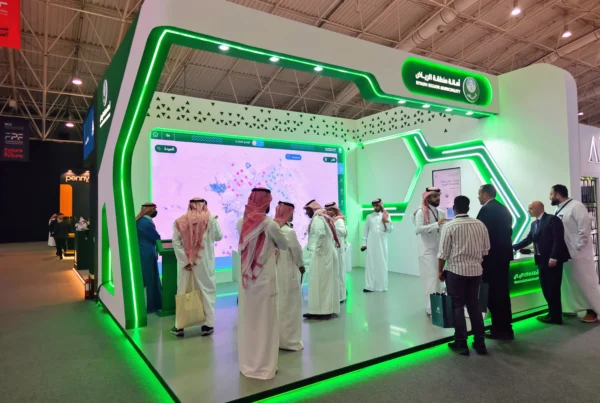
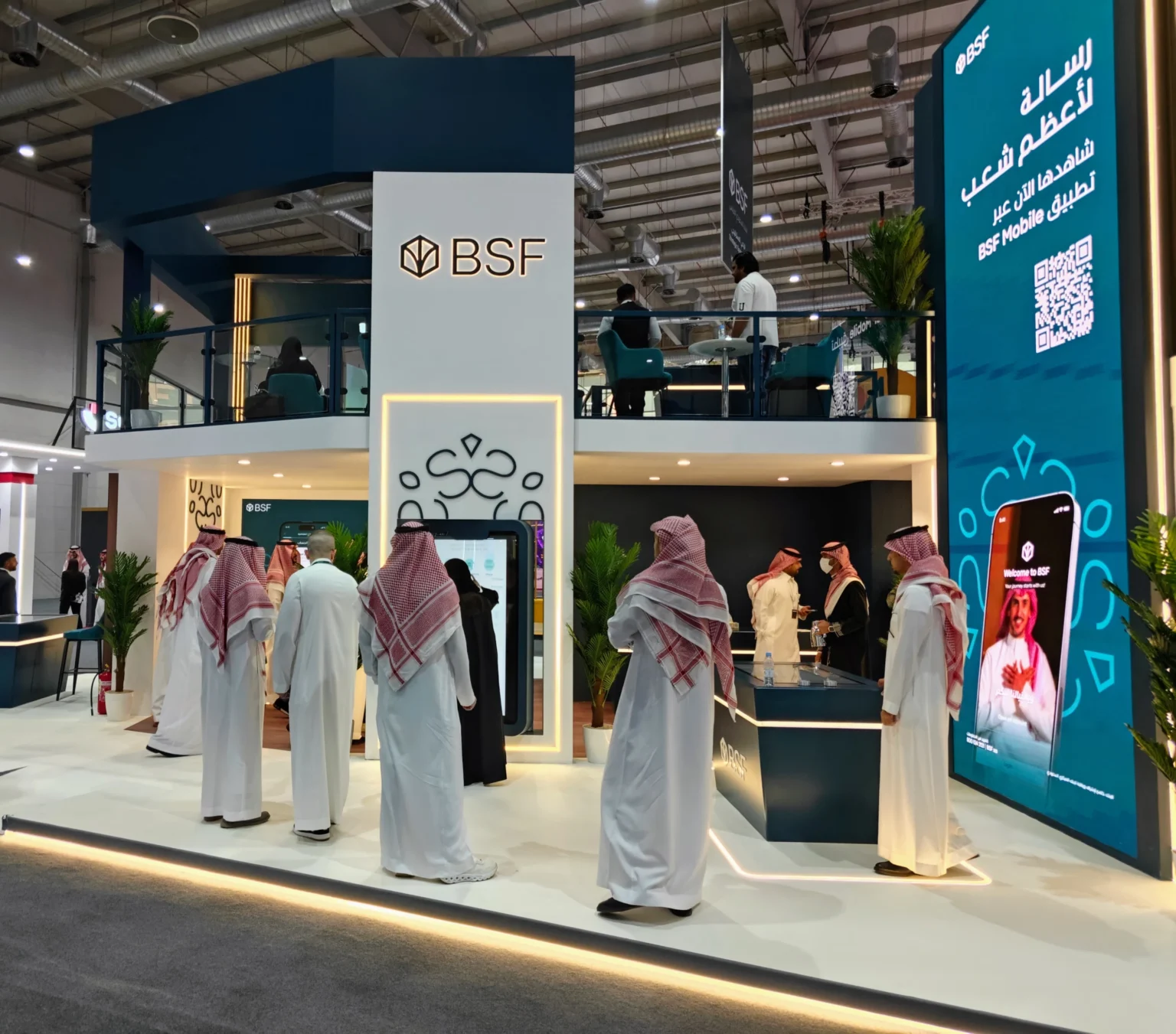
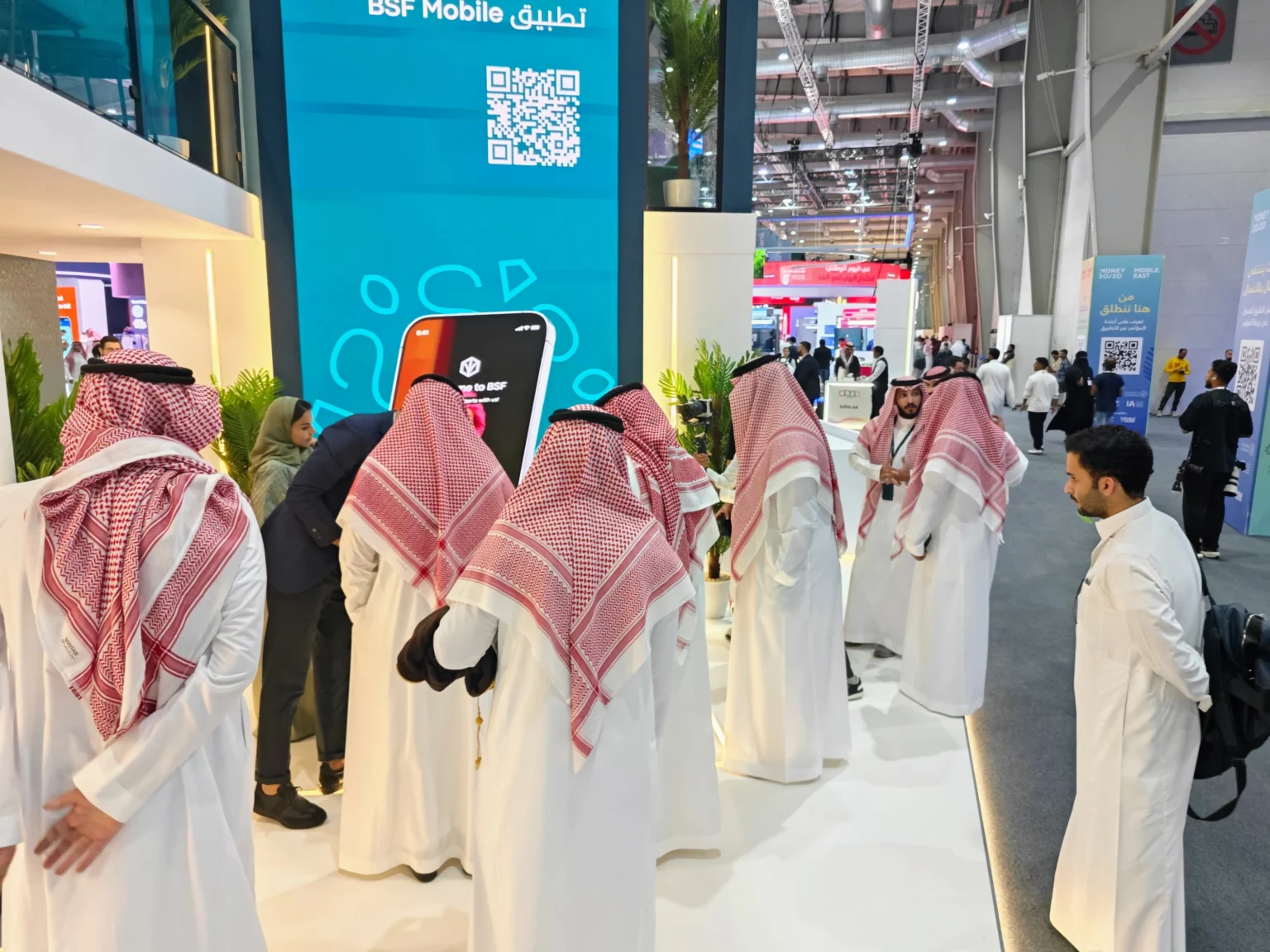
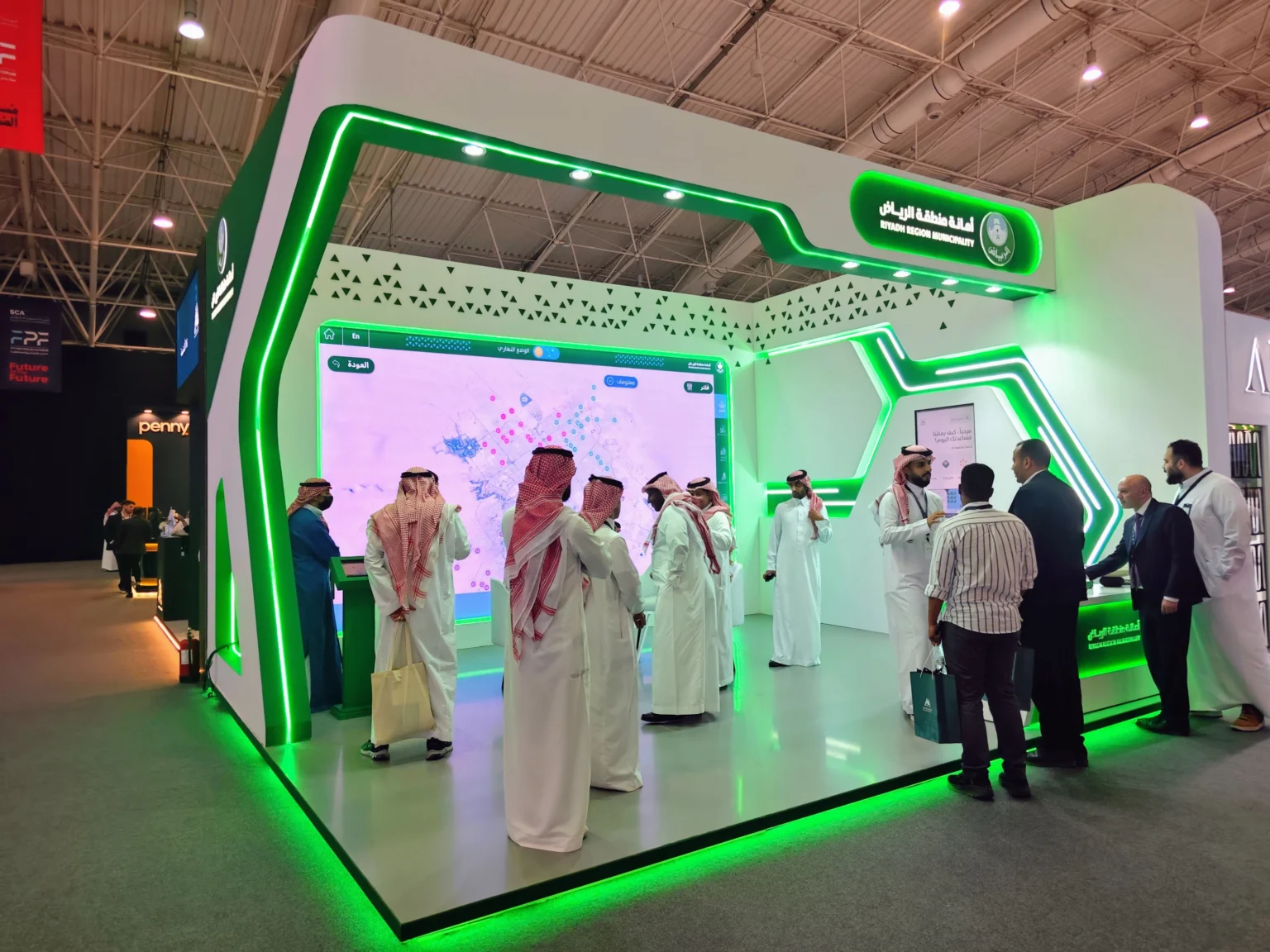
At Money20/20 Riyadh, BSF combined a tangible table with a large Mobile App Explorer. At Future Projects Forum, the Riyadh Digital Twin supported project discussions on a large display. These deployments demonstrate guided storytelling, shared attention and presenter control. They do not justify a universal engagement or revenue benchmark.
Common customer journey mapping mistakes
The promise, arrival and follow-up are part of the same experience.
The activation becomes a feature list instead of a response to a visitor decision.
Broad demographic descriptions rarely explain real questions, barriers or buying roles.
A strong interface cannot rescue an undefined greeting, presentation route or handoff.
Engagement, consent, qualification and commercial progress are different states.
Offline states, queues, hardware recovery, accessibility alternatives and content resets need rehearsal.
A practical eight-step implementation process
- Choose the priority audience and decisionDocument who the route serves, what should become clearer and the next useful action.
- Collect evidenceReview interviews, prior event questions, queue observations, lead notes and follow-up performance.
- Map the current journeyShow stages, goals, friction, touchpoints, owners and evidence without assuming new technology.
- Design the future journeyRemove unnecessary steps, add the right responses and define quick, guided and accessible routes.
- Prototype space, interface and staff togetherTest sightlines, interaction length, language, handoff and reset in realistic conditions.
- Define measurement and privacyAgree event names, qualification criteria, consent treatment, retention and CRM ownership.
- Rehearse live scenariosTest peak traffic, weak connectivity, unavailable staff, hardware recovery and the promised follow-up.
- Review with evidenceCompare results with the baseline, record failures and improve the next event journey.
For a detailed real-world delivery example, read how we planned the BSF interactive booth at Money20/20 Riyadh. It shows how interaction length, presenter scripting, reliability and handoff decisions affect the experience on a busy exhibition floor.
Planning an experiential event journey?
Chameleon Interactive can help map the visitor journey, prototype the experience, design the content and interface, integrate the technology, rehearse the staff handoff and support delivery on site.
Frequently asked questions
What is customer journey mapping for experiential events?
It is a visual plan of the participant’s goals, questions, touchpoints, friction, emotions, owners, evidence and next actions before, during and after an event.
How is an event journey map different from a run-of-show?
A run-of-show coordinates production by time. A journey map describes the participant’s experience and connects each touchpoint to a goal, owner, measure and next action. The two documents should inform each other.
What stages should an experiential event journey include?
A practical model includes before the venue, arrival, experience, conversation and follow-up. Teams can rename or subdivide the stages, but should not ignore expectation-setting, handoff or post-event continuity.
Which metrics should an event journey map include?
Use metrics matched to the objective, such as relevant content reached, route completion, throughput, qualified lead rate, appointment attendance and opportunity progress. Separate interaction signals from CRM stages and commercial outcomes.
How does journey mapping support event lead generation?
It defines when a visitor should be invited to provide information, what context is passed to sales, how qualification is confirmed and who owns the next action. It prevents every interaction from being counted as a lead.
How often should an event journey map be updated?
Review it after each meaningful rehearsal and event. Update it when audience needs, content, venue conditions, technology, staffing, data rules or commercial objectives change.
Editorial review: This guide was checked against current guidance from Nielsen Norman Group, Google Analytics, W3C and the UK Information Commissioner’s Office on 2 September 2026. Commercial results depend on the audience, offer, event conditions, implementation and follow-up process.