What’s Rising, What’s Fading, and What’s Overhyped (and what to build instead)
2026 is the year immersive booths stop being “cool installations” and start being treated like strategic spend. When budgets tighten, the teams that win aren’t the ones who build the biggest spectacle they’re the ones who can explain, in plain language, what the booth does and how it converts attention into outcomes.
That shift is showing up across industry reporting heading into 2026: more pressure to prove impact, more emphasis on intentional design, and more attention to human connection and measurable value. One clean example is BCD Meetings & Events’ 2026 trend work (and the coverage around it), which frames meetings as strategic investments and highlights experiential design alongside broader shifts in how audiences engage. See the BCD report PDF, What’s Trending 2026, and this short summary from Conference News.
At the same time, the hardware world is still expanding. AVIXA’s Industry Outlook (IOTA) predicts the global Pro AV industry will grow from $332B in 2025 to $402B by 2030. That’s not a niche signal it’s a clear indicator that environments (LED, audio, networked AV, experience tech) remain a growing canvas. AVIXA’s press release is here: AVIXA Research Forecasts Pro AV Industry Set to Reach $402 Billion by 2030.
Meaning: the canvases aren’t shrinking. What’s shrinking is patience for booths that look expensive but behave like a screensaver.
So this article is a trend map with one goal: help you decide what to invest in for 2026 without defaulting to generic “AI + XR + sustainability” slogans. If you want the Chameleon lens from the start, think in terms of an interactive layer (the logic that makes AV feel like a coherent journey), not isolated gadgets that’s the core of our positioning on Smart Interactive Solutions.
The real shift in 2026: from “wow” to throughput
Most booths fail for one simple reason: they don’t respect the mathematics of a trade show.
A show floor is not a museum. It’s a noisy, time-starved environment where visitors make a decision in seconds: Is this worth my attention? If you win those seconds, you get a conversation. If you lose them, you get a glance and a walk-by.
That’s why the most useful KPI for immersive booths in 2026 isn’t “dwell time” in isolation it’s throughput: how many people per hour can you pull into a meaningful micro-journey that ends in a clear next step (meeting, demo booking, qualified lead, partner discussion). This outcome-first framing aligns with how large industry voices are talking about 2026: more intentionality, more emphasis on results, and more focus on the value of relationships built in person. For example, Cvent’s 2026 trends explicitly call out Return on Relationships (ROR) as a key metric, and IMEX’s year-end reflection points to the rise of “return on relationships” in what’s coming next. See Cvent’s “Event Trends You Should Know for 2026” and IMEX reflects on 2025… and what’s coming up in 2026.
If you’re building for 2026, you’re not designing a booth. You’re designing a conversation engine.
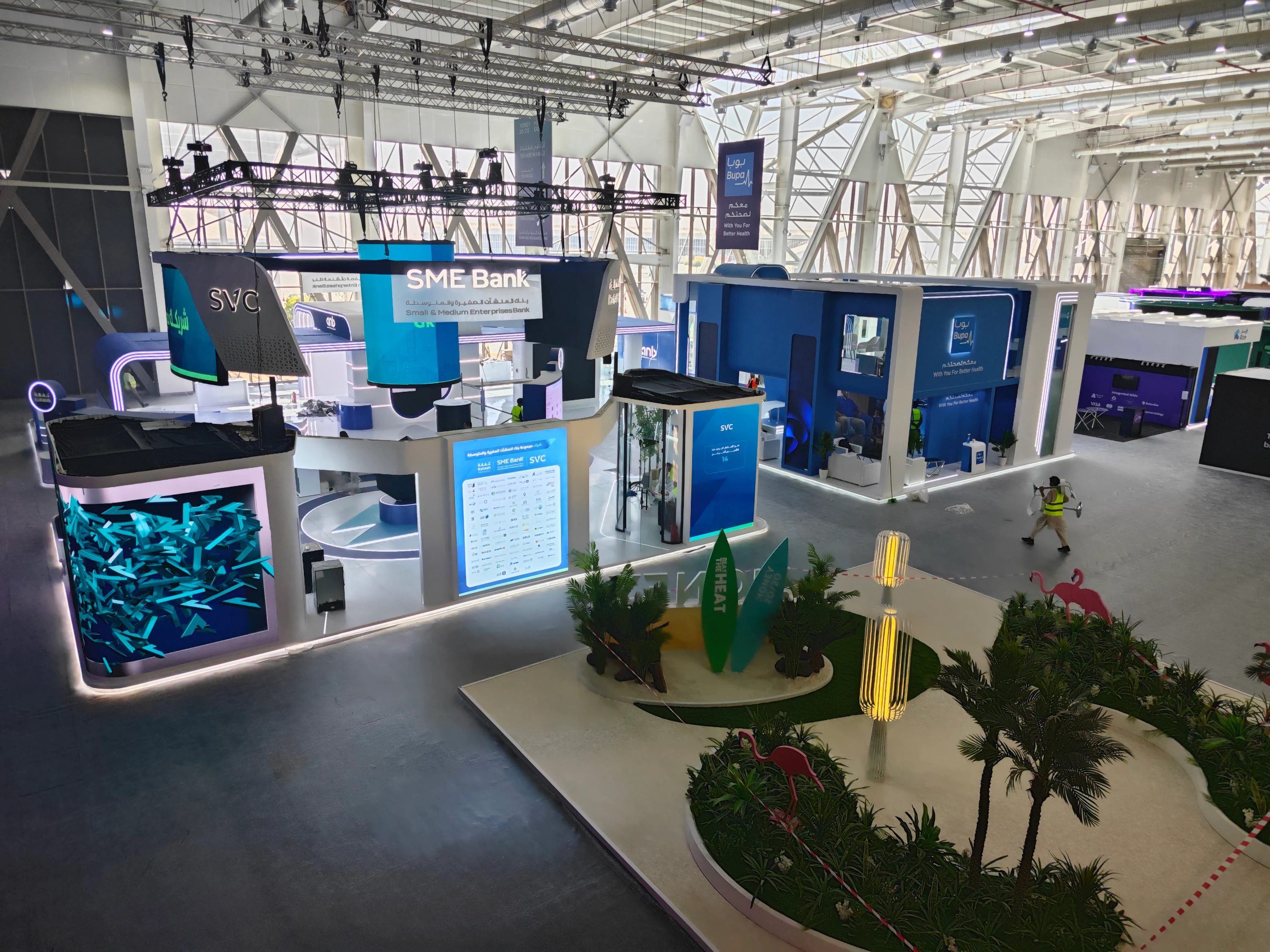
The 2026 Trend Map, in one view
I’m keeping this short on purpose. These are the trends that actually change what gets built.
| 2026 direction | What it means on the floor | What to build (practical translation) |
|---|---|---|
| Rising: Return on Relationships (ROR) | Less obsession with raw scans, more with relationship quality | A journey that qualifies intent and routes to the right human conversation |
| Rising: Booth as content studio | Moments are designed to be filmed and reused | A few “camera-proof” scenes, not one endless loop |
| Rising: Frictionless interaction | Visitors must understand how to start instantly | Tactile triggers, object recognition, readable UI (no tutorial) |
| Rising: AV-as-platform reliability | LED is the stage; failure is public | Failover ladder + monitoring + simplified operator flow |
| Fading: QR-first experiences | “Scan to start” kills momentum | QR as a takeaway, not the entrance gate |
| Fading: Headset-only VR in open booths | Low throughput, operational friction | Shared-screen real-time 3D + optional VIP VR |
| Overhyped: AI replacing booth staff | People still buy from people | AI as co-pilot: routing, summaries, multilingual support |
| Overhyped: Personalization without consent story | “Creepy tech” destroys trust | Declared intent (“choose your path”) before data capture |
The rest of the article explains why these are rising, and how they translate into build decisions.
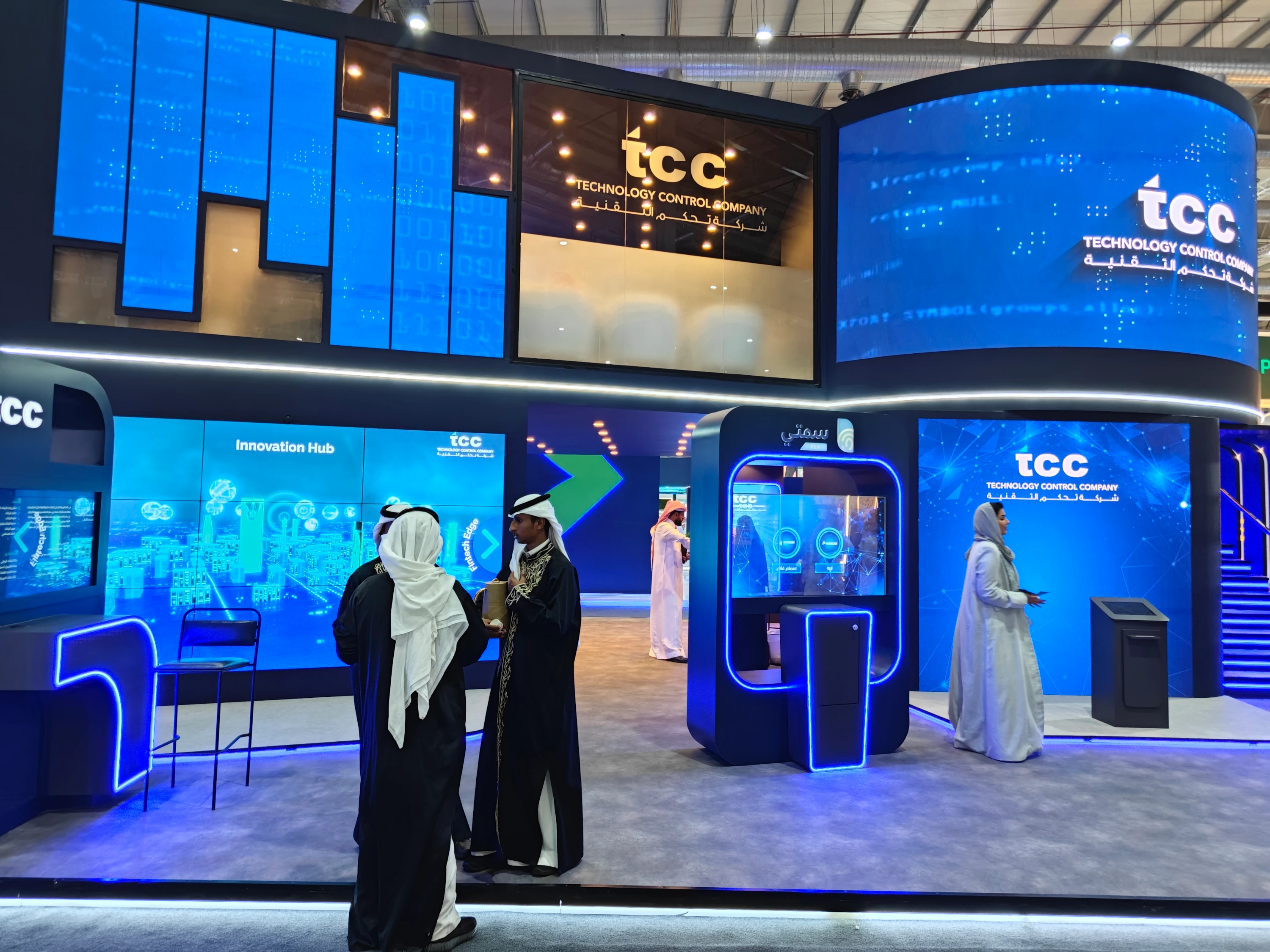
What’s rising in 2026 (and why it wins)
1) Relationship-first booths: ROR becomes the real scoreboard
The industry has been circling this for years, but it’s now becoming explicit: the value of in-person is not “more touches.” It’s better relationships, faster trust, and higher-quality conversations. That’s why “Return on Relationships” appears so often in 2026-facing thinking. Cvent has an entire trend section naming ROR as a key metric for 2026, and IMEX highlights the rise of “return on relationships” in its “what’s coming up in 2026” report.
This changes booth design in a very specific way. Your booth shouldn’t be optimized for maximum footfall. It should be optimized for maximum quality conversations per hour — which means it needs a mechanism that takes a visitor from “curious” to “categorized” quickly.
Not in a creepy way. Not via a long form. More like a guided branching story.
That’s why tactile exploration formats are rising again. When people can “choose a lane” physically, you’re not only entertaining them you’re letting them self-segment without friction. You reduce the time staff spends trying to decode intent. You also make the interaction social, which matters because social proof is a silent conversion driver on show floors.
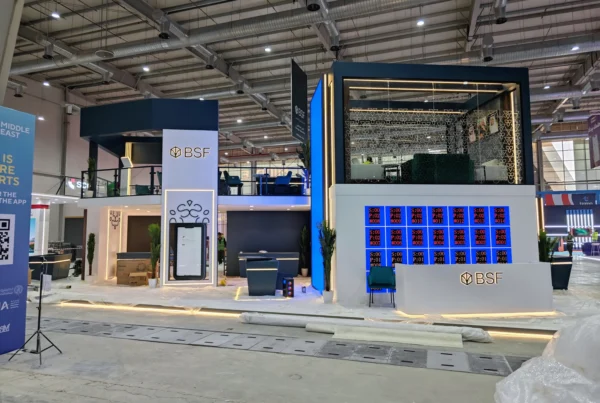
This is exactly the logic behind our Money20/20 build. In BSF at Money20/20 Riyadh: Tangible Table & App Explorer, the visitor action is simple and legible, and the interaction naturally funnels people into focused paths. If you want the “how it ran on show day” perspective, Behind the Scenes: BSF’s Interactive Booth at Money20/20 Riyadh is the right internal reference.
The trend here isn’t “tangible tables.” The trend is self-segmentation without friction and it aligns perfectly with ROR thinking because it increases the probability that each interaction ends in a meaningful handoff instead of a polite “thanks.”
2) Booth as a content engine (because “the show” isn’t the full campaign anymore)
A 2026 booth is increasingly judged by what it produces beyond the show: clips, story fragments, sales enablement assets, and proof that the brand created “moments worth sharing.” This isn’t a vibe; it’s visible in how platforms and event tech companies are investing. One concrete indicator: Cvent acquired Goldcast, explicitly pointing at turning live moments into video clips, summaries, and recaps with AI support which is basically the “content engine” idea formalized as a product direction. See MeetingToday’s coverage of Cvent acquiring Goldcast.
But “content engine” doesn’t mean putting a camera in the corner. It means your booth is designed around a few scenes that are readable on a phone and understandable without audio.
A common mistake is building one giant continuous visual and assuming it will generate clips. Usually it won’t. You need moments. The simplest way to think about it is: a reveal moment (something changes because the visitor did something), a scale moment (the shot that communicates ambition/credibility), and a human moment (staff + visitor doing something together). Those three alone can fuel weeks of content and sales collateral if they’re designed deliberately.
If you want an internal framework to anchor this, our post From Concept to Reality: Planning a Complete Immersive Booth Experience already structures the logic the right way: spatial design, interaction beats, content choreography, and the visitor handshake. That’s the direction 2026 rewards.
And when you want to connect the idea to the “stage,” our Smart Audiovisual Solutions page is a natural internal link because content output only works when the physical environment is built for camera and for legibility.
3) Frictionless interaction beats clever interaction
Most visitors won’t read your instructions. They’re not rude; they’re overloaded. So the interactions that win in 2026 are the ones that explain themselves.
That’s why you see rising preference for big metaphors (maps, product cards, “choose your path”) and physical triggers (tokens, object placement). The show floor rewards interactions that can be understood from ten meters away. This is also one of the reasons tactile and object recognition experiences keep winning: they’re obvious, and they give the crowd something to watch while someone else is interacting.
Our Table Object Recognition for AECD 2025 is a good example of “legibility first”: the table action is immediate, and the vertical screen amplifies the result for the crowd. That amplification matters in real environments, because half your booth’s audience is watching before they decide to join.
This direction also connects to the operational reality described in multiple 2026 trend discussions: teams are under pressure to do more with less, and technology is increasingly expected to reduce friction rather than add complexity. Cvent’s 2026 trends frame the year as defined by intentionality and outcomes, with relationship measurement and practical AI as part of that story.
4) AV becomes the platform and reliability becomes part of the brand
As AV becomes more networked and software-defined, the cost of failure rises. The market signals here are strong: AVIXA’s IOTA outlook doesn’t just forecast growth; it frames Pro AV as resilient and expanding across the next five years.
You can also see the “what’s changing inside Pro AV” angle in summaries like ISE’s IOTA-informed Pro AV trends with AVIXA, which touches on the recalibration of growth and the macro pressures that affect purchasing — exactly the kind of reality that pushes booth buyers to demand reliability and predictable delivery.
In 2026, a booth that crashes doesn’t just lose engagement. It broadcasts incompetence.
So “AV-as-platform” thinking is rising: you design the booth like a product with graceful degradation. When real-time fails, the experience should fall back to something that still looks premium and still tells the story. When interaction fails, the booth should still operate as a strong cinematic stage supported by staff narration. When internet fails, core content should still run locally.
That’s why reliability is not just a technical detail; it’s brand protection. It’s also why “interactive layer” matters: you’re not buying screens, you’re buying an experience that keeps working when real life happens.
This is a natural place to link both the “experience stage” and the “logic layer” inside your site: Smart Audiovisual Solutions and Smart Interactive Solutions.
What’s fading in 2026 (not because it’s “bad,” but because it’s inefficient)
QR-first journeys (QR isn’t dying “QR as the front door” is)
QR codes aren’t going away. What is fading is the idea that the first step of your booth journey should be “scan to begin.” The reason is simple: the first ten seconds on a show floor are fragile. The visitor is still deciding whether you’re worth stopping for, and a QR gate adds friction before you’ve earned attention.
In 2026, the stronger pattern is “QR as a receipt.” Let people experience something first, then give them a QR to take it with them: a personalized recap, a link to the exact content they explored, or a booking page already pre-filled with context. That keeps the interaction moving while still giving marketing something trackable. This direction fits the broader “intentionality and outcomes” framing in Cvent’s 2026 trends coverage.
What replaces it in practice: a visible, self-explanatory start moment (touch, token, object placement, or one “choose your path” choice), followed by an optional QR at the end for continuity.
Headset-only VR in open booths (VR still works just not as the default path)
VR remains powerful when the environment is controlled: VIP rooms, appointment-based demos, and situations where a buyer genuinely needs spatial understanding. But headset-only VR as the main show-floor mechanic is fading because it loses on throughput and operations. The booth becomes a queue. Staff becomes an onboarding team. The experience becomes fragile the moment footfall spikes.
In 2026, the more resilient pattern is shared-screen real-time 3D (high visibility, high capacity) as the default, with VR used selectively as the “deep dive” for the right people. It keeps the booth social others can watch, understand what’s happening, and decide to join which is exactly what you want if you’re optimizing for relationship outcomes rather than isolated experiences. That aligns with the “Return on Relationships (ROR)” emphasis called out in Cvent’s 2026 trends.
A practical rule of thumb: if you can’t run the experience smoothly with a sudden 3× increase in visitors, it’s not a great default mechanic for a high-traffic hall.
Static “wow props” with no measurable mechanism (the easiest line item to cut)
Big set pieces aren’t fading because they’re “uncool.” They’re fading because procurement is asking a sharper question: What did it do? A spectacular object that doesn’t create a repeatable interaction, a clear story beat, or a handoff to a business action is hard to defend as strategic spend especially in a year where trend reporting repeatedly frames events as more intentional, more strategic, and more outcome-oriented.
In 2026, “wow” survives when it has a job. A kinetic element that triggers a reveal moment. A sculptural centerpiece that’s also a navigation metaphor. A dramatic environment that makes people film and share and then routes the right people into the right conversation. That’s the difference between a prop and a conversion device.
A useful framing from BCD Meetings & Events’ What’s Trending 2026 is the emphasis on agility and renewed focus on human connection; the “wow prop” only earns its place if it strengthens those outcomes.
What’s overhyped in 2026 (and what actually works)
“AI will replace booth staff” (the real win is AI as an operational layer)
The biggest overhype is AI “replacing” booth staff. In practice, AI is most valuable when it’s invisible: routing, summarizing, multilingual support, and faster follow-up. That’s consistent with the tone of Cvent’s 2026 event trends, which describes 2026 as defined by intentionality and outcomes, with AI moving from novelty toward operational use.
You can also see where investment is going: Cvent’s acquisition of Goldcast is explicitly framed around turning live moments into reusable video clips, summaries, and recaps using AI-basically “booth as content engine” made into workflow. Here’s the coverage from Meetings Today.
What actually works on the floor: AI as a co-pilot for humans. The visitor chooses a path (role, topic, challenge). Staff instantly sees a short summary of what that person cared about and what to show next. Follow-up is drafted fast then reviewed and sent by a human. You don’t replace trust-building; you compress the overhead around it so staff can spend more time in real conversations.
“Hyper-personalization” without a consent/value story (fast path to “creepy tech”)
Personalization is real, but it’s overhyped when it’s treated as mind-reading. On a show floor, the safer and often more effective version is declared intent. Ask one clear question (“What are you here for?”) and adapt the journey based on that. It’s faster, more respectful, and it naturally supports relationship-first measurement.
The key is the value exchange: visitors will share information when they immediately understand what they get in return. A tailored walkthrough. A custom recap. A meeting with the right expert. When personalization feels like a service rather than surveillance, it supports the “ROR / outcomes” narrative instead of undermining trust.
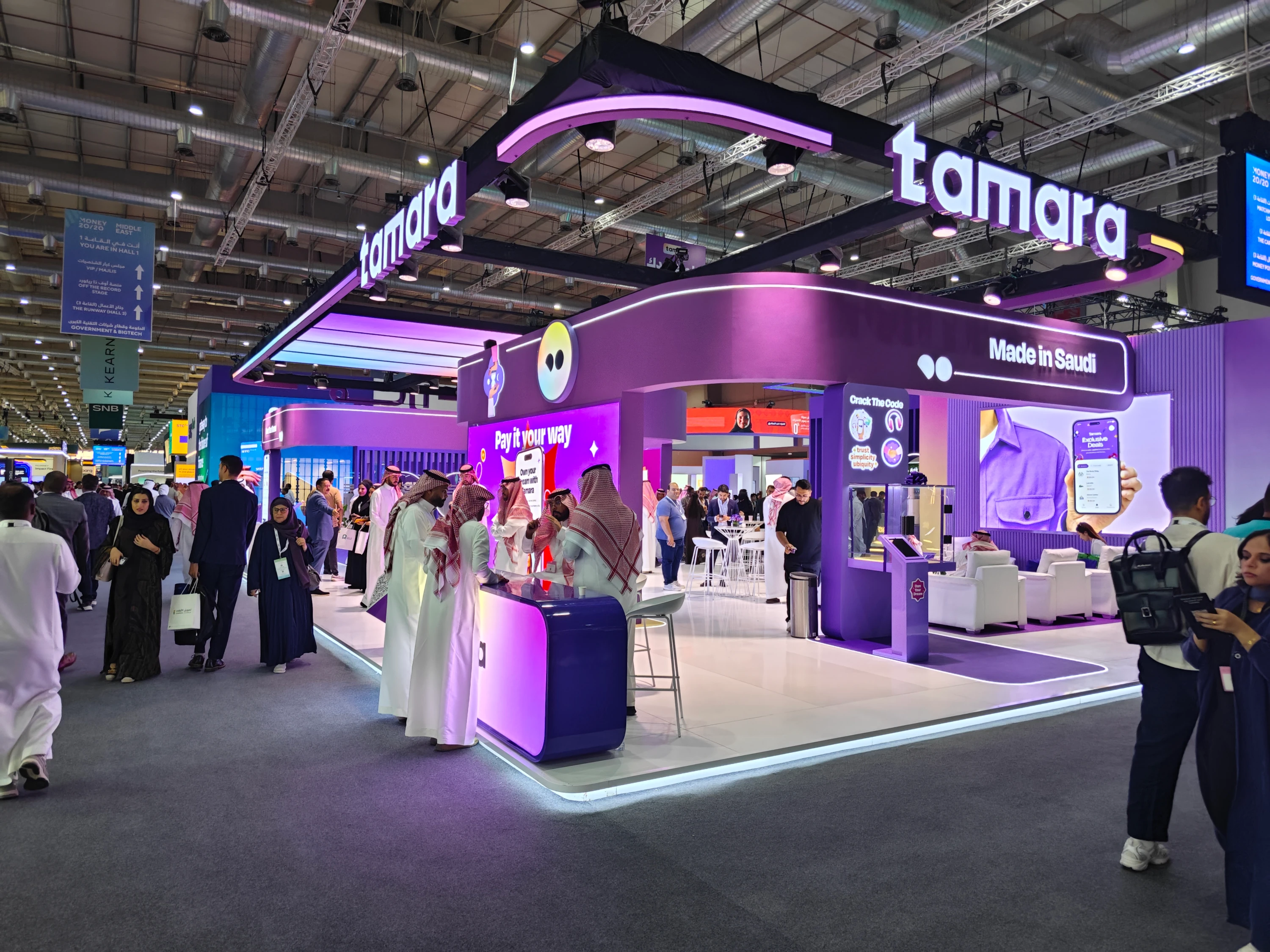
The 2026 build formula
If you want an immersive booth that feels premium and survives procurement, build it as four connected parts and design them as one system, not four separate vendor deliverables.
1) The hero canvas (gravity)
Start with a hero canvas often LED that makes people look before they even decide to stop. In 2026, the canvas matters because AV is increasingly the stage for experience-driven marketing, and Pro AV investment keeps growing. (AVIXA’s outlook forecasts the Pro AV industry growing from $332B in 2025 to $402B by 2030.)
This is where our approach to Smart Audiovisual Solutions fits naturally: the physical environment and the content need to be designed together, not “screen first, story later.”
2) The start mechanism (no instructions)
Next, add a start mechanism that doesn’t require reading. Tokens. Object recognition. One obvious “choose your path” moment. The visitor should understand how to begin within seconds, even from the corner of their eye.
This is the heart of what we mean by an interactive layer and why we position it the way we do on Smart Interactive Solutions. The interaction isn’t just a UI; it’s a filter that qualifies intent without slowing the booth down.
3) The 90–120 second story (repeatable)
Then design a 90–120 second story that repeats cleanly. Not a full product tour a compressed narrative that lands one message, demonstrates one value, and ends in a question. The repeatability is the point: your booth shouldn’t perform well only at 10:00 a.m. It should perform when the hall is packed.
4) The human handoff (conversion)
Finally, build a human handoff that turns interest into a business action. A booked meeting. A routed conversation. A qualified follow-up with context. This is where “relationship-first” stops being a slogan and becomes an operating model.
High-throughput formats like tangible exploration and object recognition perform because they turn complexity into clear paths while staying social and camera-friendly. If you want examples across different formats, our proof library is here: Smart Interactive Solutions Projects.
A more useful prediction for 2026: booths get smaller, but smarter
2026 isn’t only about the biggest expos. More planners and brands are looking for formats that justify spend through clearer outcomes and deeper relationships an idea that shows up in 2026 trend reporting and summaries around agility, strategic intent, and human connection.
That pressure quietly changes build strategy. Instead of designing one massive, bespoke “single-use” experience, teams are starting to favor modular systems: interaction logic and content units that can be redeployed, re-skinned, and re-routed across multiple events. The hero canvas stays. The start mechanism stays. The story swaps to match the audience. The routing changes depending on what you’re selling at that event.
That’s how immersive becomes scalable instead of one-off and it’s also how you protect your investment when the calendar changes.
Summary
If you’re planning a 2026 booth, don’t start with “what tech is trending.” Start with two questions: what’s the shortest story that still changes a visitor’s mind, and what’s the cleanest handoff into a real business action?
When you answer those, the trend map becomes obvious. You’ll invest in frictionless interaction, reliability, and relationship outcomes and you’ll avoid QR gates, headset bottlenecks, and AI theatre.
FAQ: Immersive Booth Strategy 2026
1) What are the most important immersive booth trends for 2026?
In 2026 the winners are booths built for relationship outcomes and operational reality: frictionless starts, short repeatable stories, and a clear handoff to meetings or qualified follow-up. Booths are also designed as content engines, with “camera-proof” moments that can be reused after the event.
2) Why are QR-first booth journeys fading in 2026?
Because they add friction at the worst possible moment the first ten seconds. Visitors need to understand and start the experience instantly. QR works best as a “receipt” after value has been delivered (takeaway, recap, booking link), not as the entrance gate.
3) Is VR still worth using at exhibitions in 2026?
Yes, but mostly in controlled formats: VIP rooms, appointment-based demos, and deep dives where spatial understanding is essential. As the main open-booth mechanic it often struggles with throughput, queues, staffing load, and operational fragility.
4) What does “throughput” mean for an immersive booth, and why does it matter?
Throughput is how many people per hour can successfully experience your core story and reach a meaningful next step. It matters because show floors are noisy and time-starved a “great” demo that only works for a few people per hour usually underperforms a simple journey that scales all day.
5) How should we use AI in a booth without turning it into a gimmick?
Use AI as an operational layer: help staff route visitors, summarize interests, support multilingual explanations, and speed up follow-up. The best pattern is AI-assisted humans, not AI replacing humans trust-building and conversion still happen person-to-person.
6) How do you measure booth ROI in 2026 beyond badge scans?
Start with outcome metrics: qualified meetings booked, lead quality, follow-up speed, and pipeline influence. Add experience metrics that explain performance: time-to-first-interaction, completion rate, and demos/hour. These show whether the booth is truly functioning as a conversation engine.
7) What is the simplest “build formula” for an immersive booth that works in 2026?
A hero canvas (often LED) that creates gravity, a start mechanism with zero instructions, a 90–120 second repeatable story, and a human handoff that turns interest into a real business action. Designed together, this combination stays premium, scalable, and defensible under procurement.
Ready to Turn Your 2026 Booth Strategy into a Buildable Concept?
If you’re planning an immersive booth for 2026, don’t start with a shopping list of technologies start with the shortest story that changes a visitor’s mind, the fastest interaction that gets them involved, and the cleanest handoff into a real business action. If you want help turning this trend map into a booth concept that’s measurable, reliable on show day, and built for high-throughput conversations, reach out here: Contact Chameleon Interactive.