You have seen the decks:
“Photorealistic digital twin”
“Interactive city model”
“Immersive VR experience for Cityscape or MIPIM”
Then 6 to 12 months later someone quietly admits:
“We spent a six figure budget and honestly, we used it twice.”
It is rarely because digital twin technology does not work. The market for digital twins in real estate and infrastructure is growing fast, and more and more developers, cities and asset owners are exploring how to use them.
The real problem is how projects are scoped, implemented and adopted.
In this article, we walk through 7 common mistakes we see in real estate digital twin projects and how developers, asset owners and marketing teams can avoid them. If you are considering a new digital twin for events, sales centers or long term operations, treat this as a checklist before you sign your next proposal.
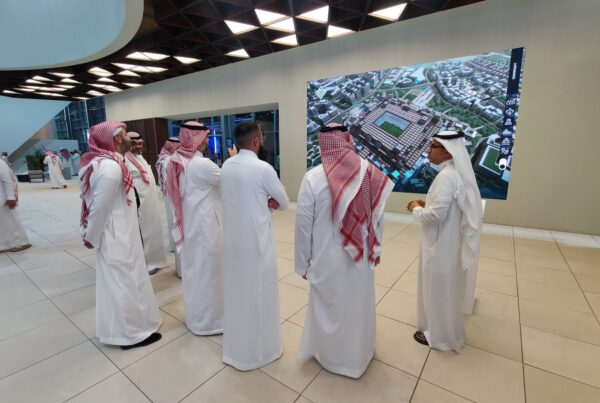
Along the way, we will reference hands on lessons from projects like the Jeddah Central Development Company Digital Twin, where we visualized over 5.7 million square meters of urban development in Unreal Engine, VR and cloud streaming.
What a Real Estate Digital Twin Really Is (and Is Not)
Before we talk about mistakes, we need a shared definition.
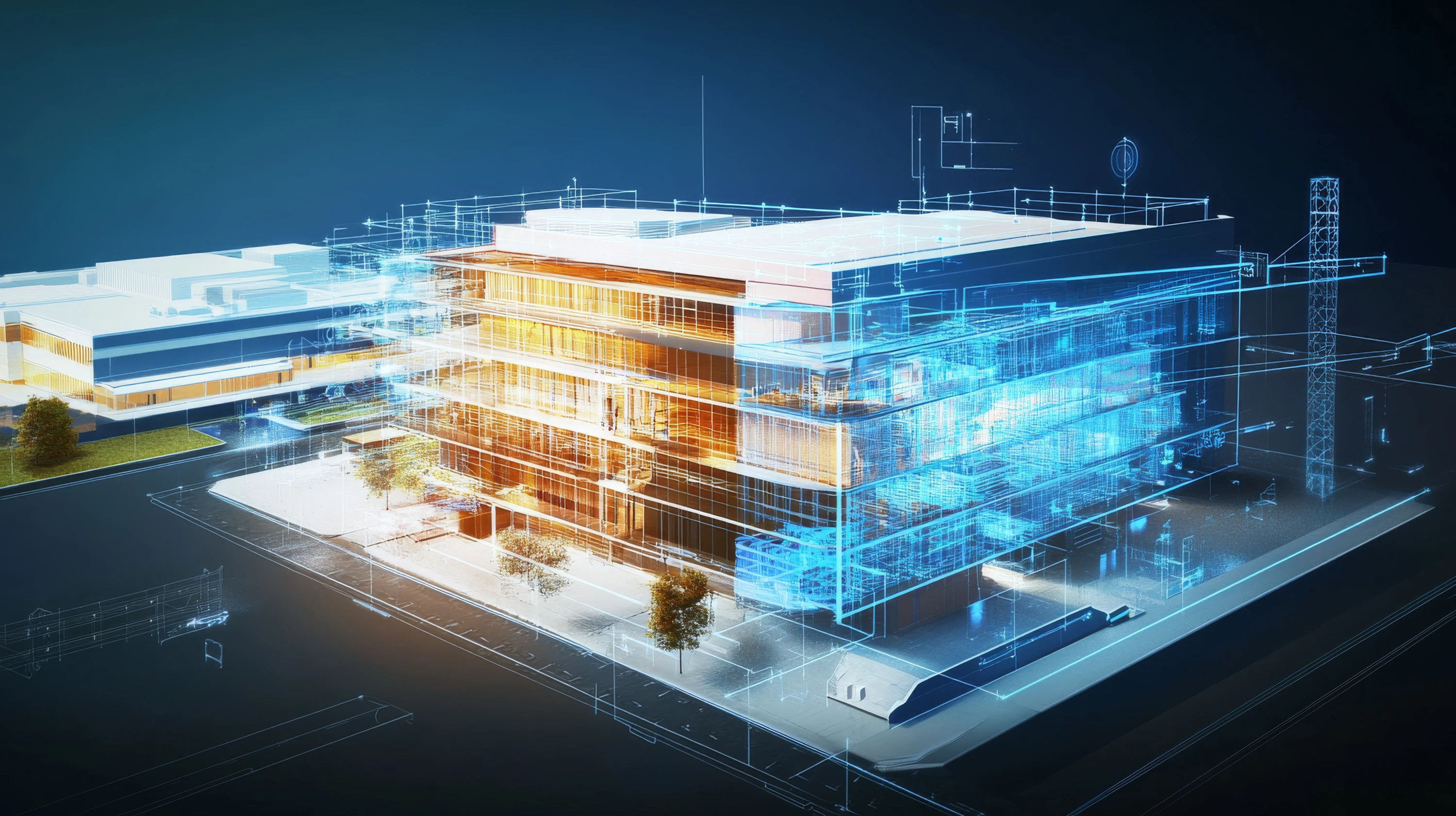
A digital twin is not just a beautiful 3D model.
In research and practice, a digital twin is usually defined as a dynamic, data connected virtual representation of a physical asset, updated over time with information about its condition, use and performance.
In real estate, a robust digital twin typically combines:
-
High fidelity 3D visualization of a building, district or entire city
-
Data layers such as unit availability, pricing, GFA, land use, traffic flows, energy data, phasing
-
Interactive tools for buyers, investors, tenants and operators, for example filters, comparisons, guided tours or dashboards
-
Multi channel delivery across LED walls and touchscreens at events, VR in sales centers, and cloud streamed access for remote buyers
Traditional architectural 3D models are usually static. They show form and aesthetics but they do not reflect changing data or user actions.
In our article “Building Digital Twin Buildings vs. Traditional 3D Models: Key Differences and Benefits” we describe this shift in more detail. The important idea is simple: a digital twin is a living system that can be updated and reused across the asset lifecycle, not just a one time visualization.
Most of the mistakes below appear when teams forget this and treat a digital twin as a one off “video game level”.
Mistake 1 – Treating the Digital Twin as Just a Pretty 3D Model
How this looks in practice
The brief is almost entirely about visual style, materials and lighting. There is a lot of discussion about trees, sky and reflections. There is very little discussion about data, user flows or business goals.
The main use case is “you can fly around and look at things”. There are no structured flows, no filters, no clear KPIs. The experience can easily become a free roam playground.
The result is something that looks amazing in screenshots but behaves like a non interactive video. When Cityscape, MIPIM or the first investor board meeting arrive, the digital twin does not answer the questions people actually have: what can I buy, what scenarios are possible, what is the ROI of this masterplan.
Why this is a problem
The real strength of digital twins is the combination of data and interaction. The value comes from making complex information visible, explorable and comparable, not only from the way it looks.
If the twin is treated as a 3D movie, your return on investment is limited to a short term “wow effect”, instead of better pre sales, more confident investors and faster decisions. We explore this in detail in “How Digital Twin Technology is Transforming Real Estate Sales”.
How to avoid it
Start with outcomes, not polygons. Before anyone opens Unreal Engine, define what this twin should achieve. For example, support off plan pre sales for two phases, help convince institutional investors, or explain a complex masterplan to government stakeholders.
Then map the data layers that should live inside the twin. That usually includes unit availability and typologies, GFA per building, land use, amenities, sustainability metrics, key numbers for each plot.
Finally, plan the actions and decisions. A good digital twin lets people do things: filter buildings or apartments by criteria, save favorites, export summaries, trigger guided camera paths that match your story, mark zones as “high interest”.
The Jeddah Central Development Company Digital Twin is a good example. It is not only a city visualization. It supports VR tours, investor storytelling, urban planning conversations and a future analytics layer on top of a huge coastal development. The vision, the data and the interaction work together.
Mistake 2 – Ignoring the Buyer Journey and Sales Scripts
How this looks in practice
At events, the sales team gives visitors a controller or a tablet and says “feel free to explore”. There is no common structure. Each salesperson improvises a different route. Some people jump from point to point, others get stuck in details.
VIP investors, retail tenants and family buyers often see the same generic overview.
Real estate is still a relationship driven business. The digital twin should support the salesperson and the buyer’s thought process. It should not become a self service toy that leaves everyone to figure out what is important.
Why this is a problem
Without a clear journey, buyers get lost. They do not know where to click or what matters. The digital twin may look expensive, but it does not answer the sequence of questions that drives a real buying decision: what is here for me, how does it fit my needs, how much does it cost, why should I choose this project over others.
Sales teams will under use the tool because it does not match how they actually sell.
In our article “Interactive Exhibitions for Real Estate Developers: A New Era of Property Showcasing” we show how guided scenarios and emotional storytelling move visitors from curiosity to reservation much faster than free roaming experiences.
How to avoid it
Start by mapping a few key personas and journeys. For most large developments this means, for example, an international family buyer who cares about schools, amenities and payment plans, an institutional investor who cares about yield, mixed use strategy and traffic flows, and a government or regulatory stakeholder who cares about public realm and infrastructure.
For each persona, sketch a short narrative of two to five minutes. What do you want to show first, second and third. What is the main message.
Turn these journeys into chapters inside the twin. Instead of one generic “explore” button, create simple entry points such as “Start Investor Tour”, “Explore Phase 1”, “Residential Deep Dive” or “Show Transportation and Access”. Connect them with pre defined camera paths and UI elements that make the story easy to follow.
Train your sales team on these flows. Give them short scripts and let them rehearse with the twin before the event or launch. They can still adapt to each person, but the logic stays consistent.
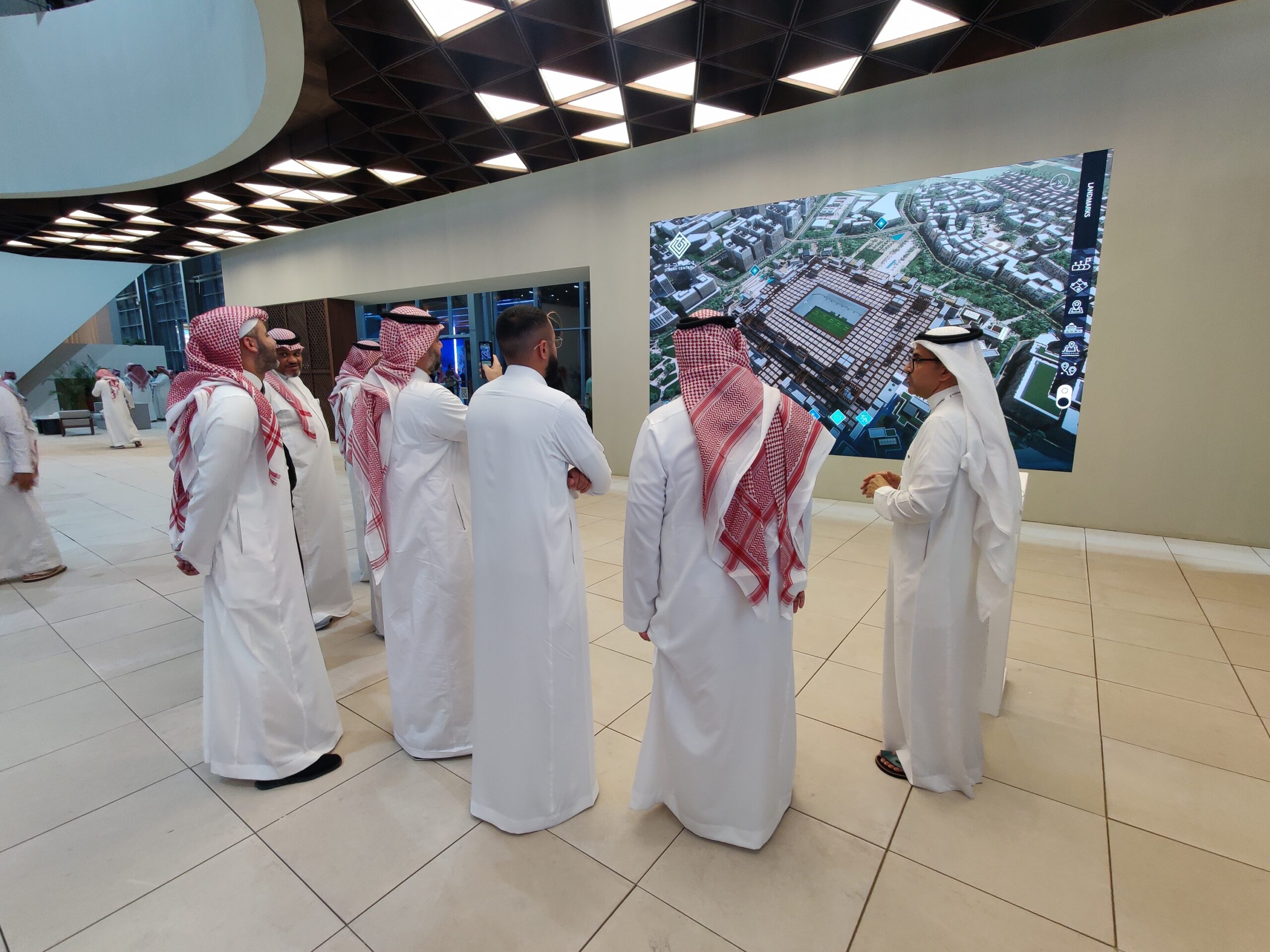
In “Fusing Digital Twins with Events: The 2025 Digital Interactive Experience That Elevates Real Estate Engagement” we describe how the same twin can offer a fast teaser on a large LED wall for the public and a deep dive tool in a private VIP room with VR, touch tables and dedicated hosts. The difference is not technology, but the journey and the script.
Mistake 3 – Overbuilding Features and Under Planning Content and Budget
How this looks in practice
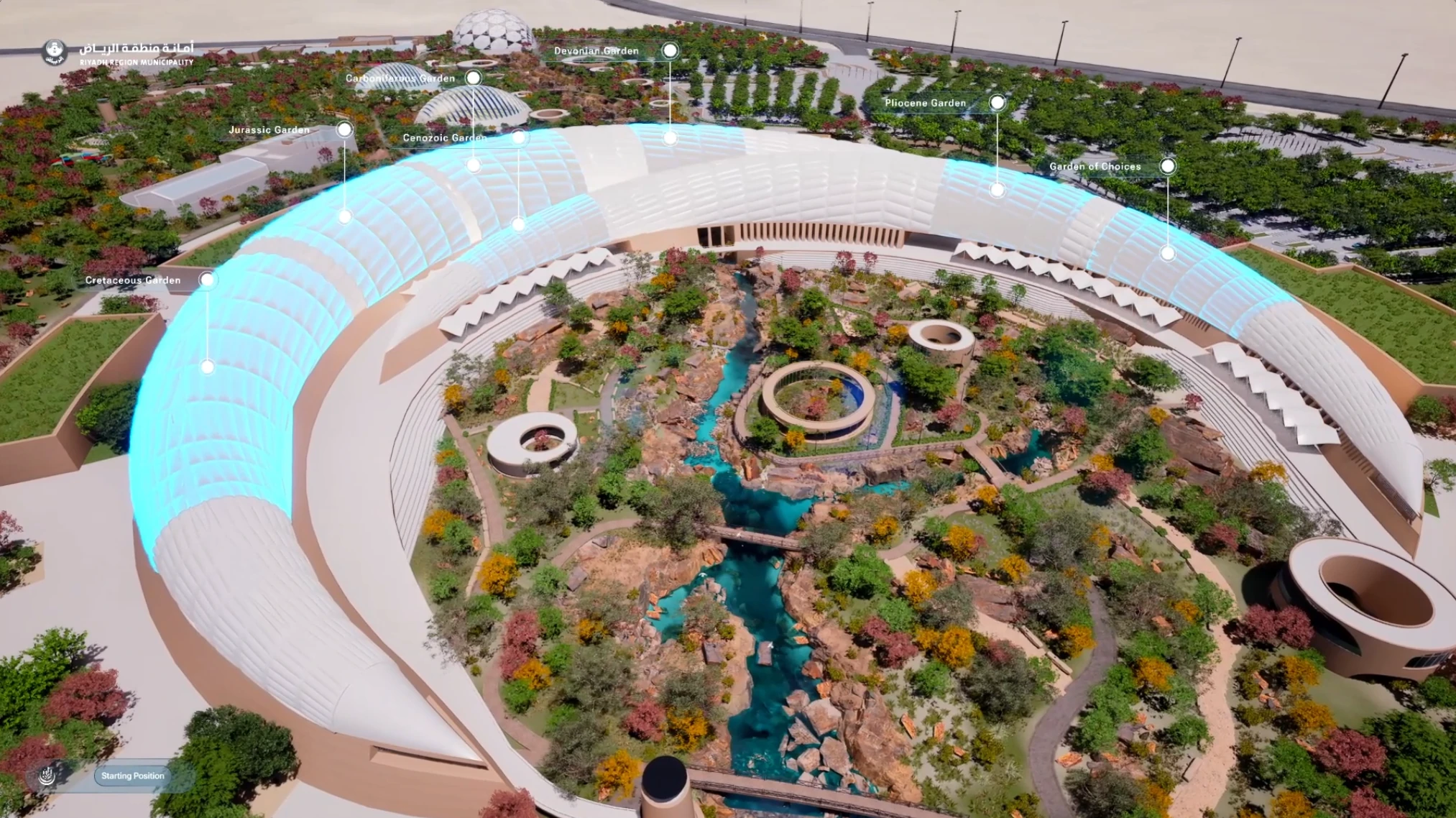
The wishlist is long. It includes live IoT dashboards, multi user mode, full day and night simulation, configurators, AR extensions, metaverse features and more. At the same time, the content plan is vague. Nobody has decided which phases, buildings and interiors really matter.
After the first prototype, it becomes clear that most of the budget has been consumed by complex features. The actual content that buyers care about, such as hero buildings, apartment layouts and public spaces, is thinner than planned.
Implementation costs go up, timelines slip and the digital twin feels “over complicated but strangely empty”.
Why this is a problem
Feature bloat creates cost and risk but does not automatically improve sales or investor confidence. The most important part of a marketing focused digital twin is still what people see and understand inside it.
If you over invest in exotic features, you risk under investing in the core content that drives decisions. Heavy features can also kill performance on event hardware and in cloud streaming, which turns live demos into technical challenges instead of memorable experiences.
How to avoid it
Define budget tiers early and link them to clear expectations. In our article “Scaling Up Your Strategy: Best Practices for Implementing a 2025 Digital Interactive Experience on Any Budget” we explain how to think in levels rather than in a single fixed scope.
For example, at a modest budget you might focus on a strong masterplan overview, a limited number of key buildings, a few representative interior typologies and one or two guided tours that cover the essentials. At higher budgets you can add more interior variety, more animation, better integration with data sources and cloud streaming.
Prioritise content before advanced features. Decide exactly which phases and buildings will be fully detailed, which amenities and public spaces matter most and which types of interiors you want to showcase. Make a clear “phase 2” list for ideas that are interesting but not essential.
Create a content roadmap. Version 1 supports your first big event or launch with enough content to tell a coherent story. Version 2 extends interiors, phases and amenities, then version 3 can focus on deeper integration with operations and analytics.
In “Digital Twin for Real Estate: 7 Key Factors for Digital Twin Success” we list the elements that matter most to a successful implementation. It is a good internal checklist whenever a new scope appears on the table.
Mistake 4 – Choosing the Wrong Technology Stack for the Use Case
How this looks in practice
The platform is chosen simply because the internal team already knows it, not because it is the best fit. Tools that are perfect for small mobile games are used to build 5 million square meter masterplans. The team discovers late that visuals look too “game like” for a luxury development or that performance collapses on large LED walls.
Why this is a problem
The choice of engine and architecture creates a long term ceiling on quality and scalability. If the stack cannot handle large environments with high visual fidelity, you will either lower your visual ambition or endlessly try to compensate with more powerful hardware.
In our article “Digital Twins for Real Estate: Why Unreal Engine Outshines Unity” we explain how Unreal Engine delivers better photorealism, large world support and strong VR and streaming options, which are crucial for real estate marketing and city scale projects.
How to avoid it
Match the engine to your primary channels.
If your focus is large scale marketing with LED walls, immersive booths and VR at events like Cityscape, Unreal Engine with pixel streaming or similar technologies is usually the right foundation. It gives you the visual quality and scalability that premium developments expect.
If your focus is lightweight AR on tablets, you can consider hybrid approaches, but they should still connect to the same core digital twin or the same content pipeline.
Think ahead about reuse. Ask if this digital twin should later run in a sales center, stream to browsers for remote buyers or eventually serve as a front end for operations and asset management. If the answer is yes, design the architecture for that from the start.
Sometimes the best solution is a combination. Internal teams handle smaller web or AR pieces, while a specialist partner delivers the high fidelity, Unreal based twin that carries your brand at international events.
For more on the infrastructural side, see our article “Cloud Streaming Digital Twin – Stream Your Building Twin Anywhere”, where we show how one high end twin can be delivered across multiple devices and locations.
Mistake 5 – Forgetting Long Term Maintenance, Updates and Reuse
How this looks in practice
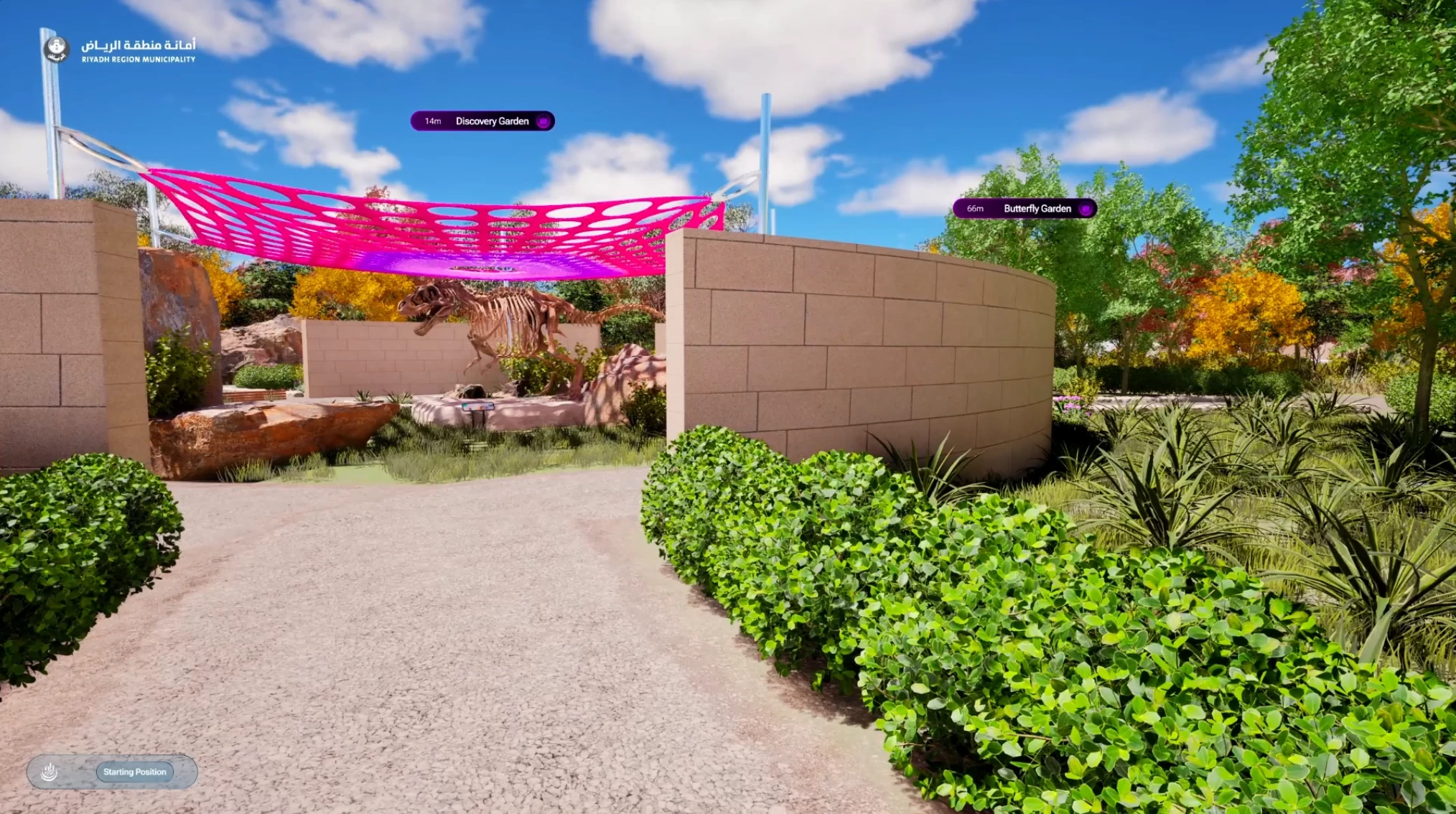
The digital twin is scoped as a one off asset for a single event. There is no clear plan for updating pricing, unit availability or new phases. After Cityscape or MIPIM, the build is archived somewhere on a server and slowly forgotten.
At the same time, almost every serious discussion about digital twins in real estate mentions long term data updates and operations as the main sources of value.
Why this is a problem
Real estate data changes constantly. Out of date twins can mislead buyers or investors. Internal teams quickly learn that “the app is not accurate” and stop using it.
You also lose the chance to amortize the investment across several years of events, sales cycles and even facility management. A twin that is designed for reuse can support trade fairs, showrooms, remote sales and later operations in one continuous journey.
In our article “How Gulf Real Estate is Evolving with AI-Driven Digital Twins” we show how AI and analytics can turn digital twins into long term platforms for understanding flows, optimizing energy and planning future phases. That only works if the twin is treated as a living system, not a one time marketing gimmick.
How to avoid it
Plan governance from day one. Decide who owns the digital twin internally, who approves content updates and how often the twin will be refreshed. For example, you may decide to update unit data every month, pricing every quarter and new phases after big milestones.
Design for reuse throughout the calendar. The same twin can support Cityscape and other exhibitions, a permanent sales or experience center, remote buyer sessions via cloud streaming and, later, operations dashboards and tenant engagement tools.
In “The Rise of Digital Twin in Real Estate: From Concept to Industry Standard” we describe this lifecycle approach in more detail.
Consider shifting from pure CAPEX to more OPEX friendly models. Instead of buying a “finished app”, structure your engagement as a solution with ongoing hosting, streaming, support and content updates. Our Digital Twin Solutions page describes how we approach this as a managed service instead of a one time file delivery.
Mistake 6 – Underestimating Change Management and Internal Adoption
How this looks in practice
The initiative is driven by an innovation or strategy team. Sales, leasing, marketing and operations see the twin for the first time at the launch. There is a lot of excitement in week one. By week six, everyone has gone back to PDFs and PowerPoint.
This is not a technology issue. It is change management.
Why this is a problem
If people do not feel ownership, they will not champion the tool. Leadership will look at low usage numbers and question the investment. You lose the opportunity to improve the twin over time based on real world feedback.
In our article “The Science of Engagement: How Immersive Audiovisual Solutions Boost ROI by 100%” we explain how good experience design can double engagement and memory. The same principle applies to internal adoption. If staff understand the benefits and feel confident using the twin, they will bring it into more meetings and more conversations.
How to avoid it
Involve end users early. Invite sales reps, leasing teams and operations managers into early concept reviews and prototypes. Ask them what they need the twin to do and what questions they face every day. Adjust flows and UI based on their input.
Create simple internal playbooks. Instead of long manuals, prepare a one page guide like “How to use the twin in a 10 minute investor meeting” and a few short screen capture videos that show the key flows.
Nominate internal champions. Identify a few people in sales or marketing who genuinely like the tool and give them responsibility for basic training and support.
Celebrate wins. When the twin helps win a deal, accelerate a reservation or impress a strategic partner, document it and share the story internally. People follow success stories much more than technical specifications.
Mistake 7 – No Clear KPIs, Budget Logic or ROI Story
How this looks in practice
The main goal is “we want something impressive for Cityscape”. Nobody defines what success will look like after the event. During budget discussions, the only metric is “how much does it cost”, not “what business value will it create”.
Without KPIs and a clear ROI story, even good projects can feel expensive in hindsight.
How to avoid it
Start by defining two or three primary KPIs.
For events and trade fairs, such as Cityscape, MIPIM or Future Projects Forum, typical KPIs include the number of qualified leads, the number of meetings booked before and during the event, average dwell time at the booth or at the digital twin station and the number of guided demos performed.
For sales centers and remote tours, you might track uplift in conversion rate compared to previous quarters, reduction in decision time from first visit to reservation, or the share of buyers who choose premium units after seeing views, layouts and amenities in the twin.
In our article “Transform Real Estate Marketing at Trade Shows with Digital Twin and Audiovisual Solutions” we already suggest several concrete measurements for trade show performance. In our article we also show how immersive AV and interactive content can support better lead quality, not only higher booth traffic.
Align budget tiers with realistic outcomes. Instead of arguing about abstract amounts, frame the conversation in terms of what can be delivered and what channels will be supported. For example, “with this budget we can cover this number of buildings and interiors, support Cityscape and a permanent showroom, and include basic analytics” or “at the higher tier we can add AI guided tours, deep data integration and browser streaming for global brokers”.
Instrument the experience. Use QR codes that link to landing pages connected to the twin, track which journeys and zones visitors explore, and connect leads to your CRM with clear tags such as “met at Cityscape”, “digital twin demo”. After the event, you will be able to compare results against your KPIs.
Tell the ROI story clearly. After the first year or the first full sales cycle, collect tangible results, such as faster reservations, higher engagement with specific zones or more confident investor conversations. Turn that into a simple internal one pager. It will make it much easier to secure budget for the next phase of the digital twin or for additional projects.
A Simple Checklist to De Risk Your Next Digital Twin Project
Before you sign your next proposal, sit down with your team and quickly review these questions:
-
Is this more than a pretty 3D model? Do we have data layers and user actions defined?
-
Do we understand our buyer journeys and sales scripts?
-
Are we prioritising content over nice to have features at our budget level?
-
Is the technology stack aligned with our channels now and in the future?
-
Have we planned for updates, maintenance and reuse across several years?
-
Do we have a plan for internal adoption and change management?
-
Are KPIs, measurement and the ROI story clearly defined?
If the answer is “not yet” for some of them, that is fine. Use the gaps as a way to improve the brief, adjust the scope or choose a partner who can help you close those gaps.
FAQ: 7 Common Mistakes in Real Estate Digital Twin Projects
1. What is a real estate digital twin and how is it different from a traditional 3D model?
A real estate digital twin is a dynamic, data driven virtual representation of a building, district or city that can be updated and reused across the asset lifecycle. It connects 3D visualization with live or regularly updated data such as unit availability, pricing, phasing or energy use. A traditional 3D model is usually static and focused on visuals only, without this data and interaction layer.
2. What are the most common mistakes real estate developers make in digital twin projects?
The most common mistakes include treating the twin as just a pretty 3D model, ignoring the buyer journey and sales scripts, overbuilding features while under planning content and budget, choosing the wrong technology stack, forgetting long term maintenance and reuse, underestimating internal adoption and change management, and starting without clear KPIs or an ROI story.
3. How much does a real estate digital twin cost for events and sales centers?
Budgets vary widely depending on scale, visual quality and scope. For many projects, an entry level budget might cover a strong masterplan overview, a limited number of key buildings, a few interior typologies and basic guided tours. Higher budgets allow for more detailed interiors, advanced animation, cloud streaming, analytics, AR extensions and deeper system integrations. In our article we suggest thinking in budget tiers linked to concrete outcomes and channels instead of a single fixed number.
4. How should we define KPIs and measure the ROI of a digital twin at trade shows like Cityscape or MIPIM?
For events, typical KPIs include the number of qualified leads, meetings booked, average dwell time at the booth or digital twin station and the number of guided demos. You can also track which parts of the masterplan visitors explore most. In our article we recommend planning the measurement setup from the start, for example using QR codes and CRM tags, so you can tell a clear ROI story after the event.
5. How do we plan the content scope of a digital twin without blowing the budget?
Start by deciding which phases, buildings, interiors and public spaces really drive decisions. Focus the first version on these elements and on 2 or 3 buyer journeys. Move non essential features to a later phase. In our article we recommend defining budget tiers and matching them to clear content packages and journeys, instead of trying to implement every idea in version one.
6. How can we reuse a digital twin after a trade fair so it does not become a one off asset?
A well planned digital twin can be reused in many contexts: at future trade shows, in a permanent sales or experience center, for remote buyer sessions via cloud streaming and later as a front end for operations and asset management. To make this possible, you need a governance and update plan, and preferably a service model with ongoing hosting and content updates, not just a one time delivery.
7. What should we look for when choosing a partner for a real estate digital twin project?
You should look for a partner who can discuss business goals, buyer journeys and KPIs, not only technology and visuals. They should understand real estate sales, events and long term operations, have proven experience with high fidelity engines like Unreal and cloud streaming, and offer a plan for content, updates and adoption. In our article we also suggest using a simple checklist of seven questions to de risk your next digital twin project before you sign the proposal.
Ready to Avoid These Mistakes in Your Next Project?
At Chameleon Interactive we have seen digital twins quietly fade away and we have seen them become central tools for marketing, investor relations and operations across the GCC and Europe.
If you would like a second opinion on an upcoming RFP or proposal, help with turning a one off expo model into a long term sales and operations asset or guidance on the right mix of Unreal Engine, cloud streaming and onsite AV, you can explore our Digital Twin Solutions or visit the Jeddah Central Development Company Digital Twin Project.